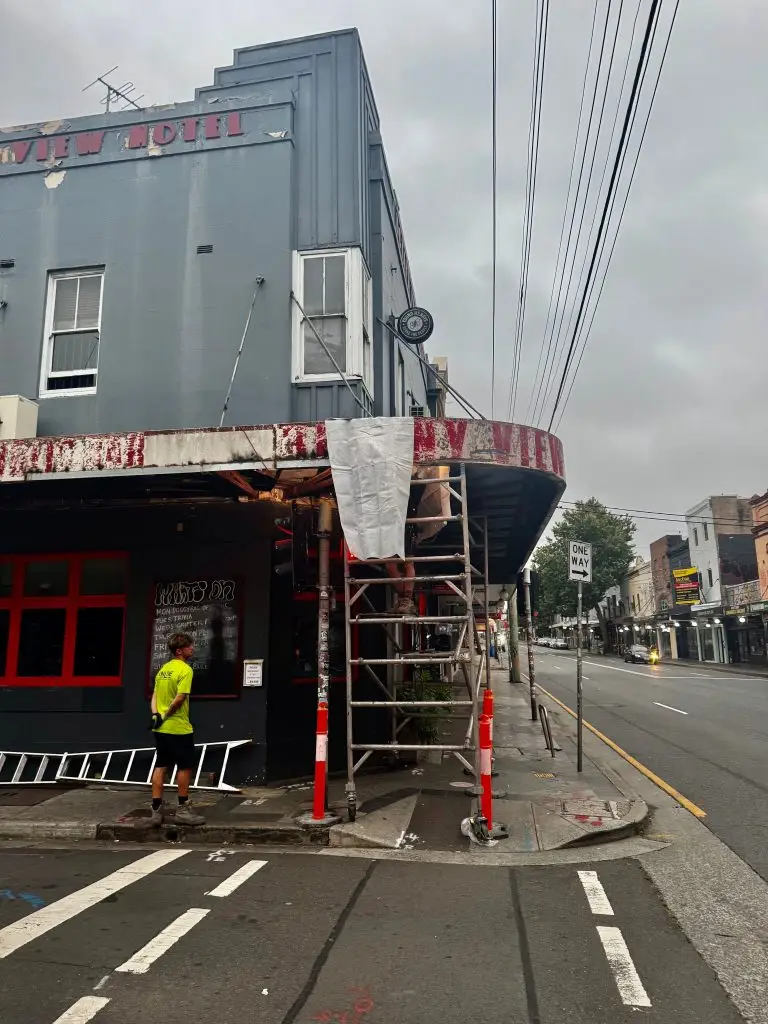
Retail Shop Awnings in Parramatta: A Technical Guide for Business Owners.
Parramatta is now Sydney’s second CBD, with busy retail strips along Church Street, Macquarie Street and the Westfield precinct. Since the Parramatta Light Rail opened in December 2024, footpaths are busier and streetscapes face closer scrutiny. Shop awnings shade the footpath, carry signage and protect pedestrians, but they are also ageing structural assets. That is why awning repairs in Parramatta are part of responsible building ownership. This guide covers how awnings are built, the stresses they face in Western Sydney’s climate, the defects that develop, and the regulations owners must meet. Why Awnings Matter in Parramatta Pedestrian protection on high-traffic corridors, now busier with light-rail patronage. Signage and branding across the awning fascia for cafés, restaurants and boutiques. Climate control by reducing solar heat gain on glazed shopfronts. Weather protection from sun, rain and hail, cutting slip hazards and water ingress. Every one of these roles depends on the awning’s structural integrity, which fades without inspection and maintenance. How Retail Awnings Are Built Most Parramatta shopfront awnings are one of three types: Suspended (hung): a frame cantilevered from the façade and held by inclined tie rods or hangers anchored above. Cantilevered: supported entirely by building fixings with no street posts, placing high bending and tension loads on the anchors. Post-supported: carried by columns at the kerb, used on wider frontages. Whatever the type, the load path matters most: dead load, wind and water must transfer safely into the building through the fascia, hangers, tie rods and anchor bolts. Parramatta’s Climate Stresses Unlike coastal suburbs where salt drives corrosion, inland Parramatta creates a different load profile: Extreme heat and UV degrade fabric, polycarbonate and coatings, while thermal cycling fatigues welds and loosens fixings. Severe storms and hail bring sudden uplift and impact loads. CBD wind loading is amplified by tall buildings; awnings must meet AS/NZS 1170.2 wind actions. Water pooling on low-fall roofs and blocked gutters adds weight and accelerates corrosion. Pollution and grime trap moisture against metal and fabric. Common Defects Behind Awning Repairs in Parramatta Corroded anchor points and tie rods: the most safety-critical defect, since failure detaches the awning. Concrete spalling (“concrete cancer”): rusting embedded steel cracks the surrounding concrete and weakens fixings. Timber rot in heritage shopfronts with framing behind the fascia. Fatigue cracking in welds and brackets from years of thermal and wind cycling. Sagging awning lines signalling overloaded or failing supports. Blocked box gutters causing ponding, added load and water ingress. Deteriorated fascia and waterproofing: bubbling paint, staining and flaking metal. Owners can spot warning signs from the footpath: rust staining, peeling paint, dripping or pooling water, rust streaks down the façade, movement in a breeze, and loose or corroded bolts. Any of these warrants a professional assessment. Regulatory Obligations Under section 142(1) of the Roads Act 1993 (NSW), anyone in control of an awning over a footpath must keep it in a satisfactory state of repair. Inspections follow Practice Note No. 18 (July 2008), which sets the scope and frequency of certification. Works affecting the awning or road reserve usually need approval from the City of Parramatta, and may require a Development Application with structural engineer’s certification. Owners near the light-rail corridor should also account for realigned kerbs, street furniture, overhead wiring and higher pedestrian volumes. Inspection and Repair Best Practice Engage a NER-registered structural engineer to inspect anchors, tie rods, welds, internal beams, brackets and gutters, including concealed elements. Obtain structural certification where the awning is sound, typically valid for five years under Practice Note No. 18. Rectify, don’t patch: deep section loss in beams or fixings needs replacement, not a recoat. Specify durable materials: galvanised or aluminium framing, marine-grade stainless fixings and UV-stable polycarbonate. Maintain drainage by keeping gutters and downpipes clear with adequate fall. Conclusion As Parramatta’s CBD intensifies, awnings work harder and face closer scrutiny. Extreme heat, severe storms, ageing buildings and rising foot traffic make regular inspection and timely awning repairs in Parramatta essential, both to protect the public and limit owner liability. Inspect early, certify integrity, and fix defects before they become failures. For professional awning repairs in Parramatta, from inspection and certification to rectification and new installs, contact Shop Awning Repairs Sydney to arrange an assessment. References Roads Act 1993 (NSW), s 142, NSW Legislation. nsw.gov.au Practice Note No. 18, Inspection of awnings (July 2008), NSW Government. gov.au AS/NZS 1170.2, Structural design actions, Part 2: Wind actions, Standards Australia. org.au Parramatta Light Rail Stage 1 (opened December 2024), Transport for NSW. nsw.gov.au Development forms and documents, City of Parramatta. nsw.gov.au
Awnings in Sydney’s Eastern Suburbs: Style, Safety & The Hidden Threat of Rust
Sydney’s Eastern Suburbs from Bondi and Bronte to Randwick, Double Bay and Vaucluse are known for their coastal lifestyle, boutique retail strips and heritage shopfronts. Retail awnings are a defining feature of these streetscapes, offering shade, identity and weather protection. But in this region, where salt-laden air and high humidity are part of daily life, awnings face a unique enemy: rust. Rust isn’t just a cosmetic issue. In the Eastern Suburbs it is one of the most common and dangerous forms of awning deterioration and one that councils increasingly warn property owners to take seriously. Understanding why it happens, and acting early, is the key to keeping awning repairs in the Eastern Suburbs affordable and your shopfront safe. Why Awnings Matter in the Eastern Suburbs Awnings in the East serve several important roles: Pedestrian protection along busy retail corridors such as Bondi Road, Oxford Street and Coogee Bay Road. Branding and visual identity for cafés, boutiques and coastal retailers. Energy efficiency, reducing heat gain in shopfronts and upper-level residences. Heritage continuity, especially in older precincts like Paddington and Woollahra. But all these benefits rely on one thing: structural integrity. The Eastern Suburbs Rust Problem and Why It’s Worse Here Rust is a chemical reaction accelerated by moisture, oxygen and critically salt. The Eastern Suburbs sit directly in Sydney’s coastal salt corridor, which means awnings here corrode faster than those in inland suburbs. Key rust accelerators across the Eastern Suburbs: Salt spray from beaches like Bondi, Bronte, Coogee and Maroubra. High humidity trapped in narrow retail streets. Blocked gutters on awnings, which councils such as Waverley Council and Randwick City Council warn can trap water and accelerate rust and wood rot. Ageing steel frames on older shopfronts, many installed decades ago. Poor drainage design, especially on older flat-roofed awnings. Water accumulation and rust can add weight, weaken anchor points and lead to collapse often without any visible warning from street level. Where Rust Appears First on Eastern Suburbs Awnings Anchor points and tie-rod fixings. These are the most critical structural elements. Rust here can cause catastrophic failure, because the awning is no longer securely attached to the building. Underside steel beams. Often hidden from casual view, these beams can rust internally before any surface signs appear. Gutter channels. Blocked gutters trap water, accelerating corrosion and adding dangerous weight. Councils specifically warn that this is a major cause of awning deterioration. Fascia panels. These rust more visibly, often showing bubbling paint, staining or flaking metal. How to Identify Rust Property owners should look for: Brown or orange staining on the underside of the awning Bubbling or peeling paint Sagging or uneven awning lines Water pooling after rain Rust streaks running down the façade Loose bolts or visible corrosion around fixings Best Materials for Rust-Resistant Awnings in Coastal Areas Aluminium frames (highly recommended). Modern aluminium awnings are effectively rust-proof, making them ideal for coastal suburbs. Aluminium forms a natural oxide layer that resists corrosion, even within 1 km of the ocean. Powder-coated finishes. These add an extra layer of protection and are available in coastal-friendly colours. Polycarbonate roofing. UV-stable and corrosion-free, polycarbonate is now preferred over older PVC or glass systems. Stainless steel (marine grade). Suitable for fixings and brackets, though more expensive. Maintenance Tips for Rust Prevention Remove salt build-up with fresh water Clear gutters and drainage channels Check for pooling water after storms Annual Professional Inspection Councils across the Eastern Suburbs including Waverley and Randwick warn that structural issues may not be visible from ground level. A qualified engineer should inspect: Anchor points Welds and joints Internal steel beams Load-bearing brackets Repainting and Recoating Use marine-grade primers and paints to slow corrosion. Replace, Don’t Patch, When Rust Is Structural Surface rust can be treated, but deep corrosion in beams or fixings requires replacement rather than a patch repair. Why Rust Is a Public Safety Issue, Not Just a Maintenance Problem Ageing awnings can collapse if rust weakens anchor points or structural elements, and these failures often occur without visible warning. In high-traffic Eastern Suburbs shopping strips where footpaths are busy from morning to night this creates a serious liability risk for property owners. Conclusion: Awnings in the Eastern Suburbs Need Coastal-Grade Care Awnings are part of the Eastern Suburbs’ identity, but the coastal environment makes rust an unavoidable challenge. With the right materials, regular inspections and proactive maintenance, property owners can protect both their investment and the public. Rust may start small a stain, a bubble, a bit of flaking paint but in the Eastern Suburbs it’s a warning sign that should never be ignored. If you’ve spotted rust or need professional awning repairs in the Eastern Suburbs, our team can inspect, recoat or replace corroded awnings to keep your shopfront safe and compliant. Contact Shop Awning Repairs Sydney to arrange an assessment.