
Shop Awnings
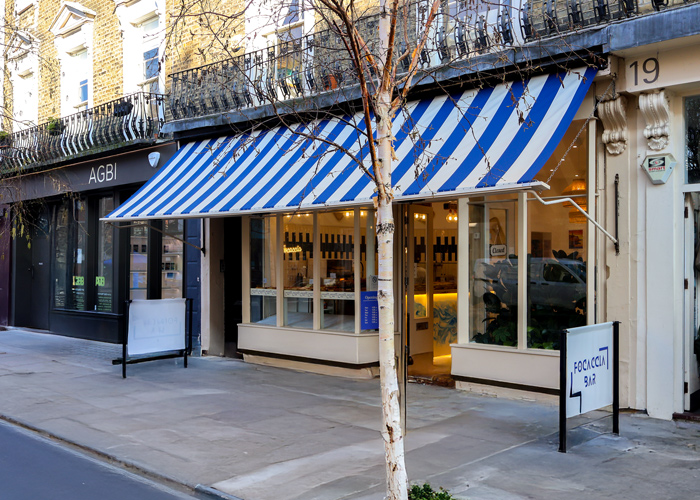
Shop Awnings A shop awning is one of the most practical investments a retail business or commercial building owner can make. Walk down any busy shopping strip and you’ll notice that the shopfronts doing the best business almost always have a well-maintained shop awning out front. It’s easy to dismiss a shop awning as a cosmetic detail, but for retail shops and commercial buildings, a good shop awning does far more than look nice, it protects, attracts, and pays for itself over time. Here’s why every retail storefront should have one. A white illuminated awning with recessed downlights over outdoor seating at Shuk restaurant. Protecting Your Storefront and Stock Sun exposure fades signage, warps timber fixtures, and can bleach the colour out of window displays within months. Rain and hail bring their own risks, from water pooling at entryways to damaged fabric on a poor-quality shop awning. A quality shop awning shields shopfronts, window displays, and merchandise from the elements, extending the life of everything from paint and signage to the products in your window. For any retail business, a durable shop awning is cheap insurance against weather damage. Keeping Customers Comfortable Retail is a business of foot traffic, and foot traffic slows down or speeds up based on comfort. A shop awning creates shade on hot Sydney days and shelter during sudden downpours, giving customers a reason to pause, browse, and linger rather than duck past a hot, glaring storefront. That extra minute of comfort under a shop awning often translates directly into a customer walking in the door. Cutting Energy Costs Direct sun on a glass storefront turns the inside of a shop into a greenhouse, forcing air conditioning to work harder. A well-positioned shop awning blocks direct sunlight from hitting windows and doors, reducing indoor heat gain and easing the load on cooling systems. Over a full Sydney summer, a shop awning can mean a noticeable dip in energy bills for retail shops and commercial buildings alike. Strengthening Your Brand with a Shop Awning A shop awning is prime real estate for your business name, logo, and colours. It’s visible from the street, day and night, and a well-branded shop awning gives a shopfront a finished, professional look that bare brick or glass simply can’t match. For commercial buildings with multiple tenancies, coordinated shop awnings also create a cohesive, well-kept streetscape that reflects well on every business inside. A fully restored curved black awning outside the Angel Hair salon shopfront. Extending Usable Space Cafes, restaurants, and retailers with outdoor seating or display areas rely on a shop awning to make that space usable year-round. Without cover, outdoor seating empties out the moment it rains or the sun gets too strong. With a shop awning in place, that space becomes an extension of the shop itself, adding capacity without adding square metreage. Protecting the Building Structure Beyond aesthetics, a shop awning helps protect entryways, doors, and window frames from prolonged weather exposure, reducing wear on seals, hinges, and paintwork. For commercial landlords, a well-maintained shop awning means fewer maintenance callouts and a longer lifespan for the building’s façade. The Bottom Line on Shop Awnings A shop awning isn’t just a shade sail with a logo on it. It protects stock and signage, keeps customers comfortable, lowers energy costs, reinforces your brand, and adds usable space to your business. For retail shops and commercial buildings alike, a shop awning is a small structure that does a lot of heavy lifting. If your shop awning is looking tired, sagging, or damaged, it’s worth getting it assessed rather than waiting for a bigger repair bill down the track. A well-maintained shop awning keeps paying for itself in comfort, protection, and street presence. Further reading: Commercial Awning Repairs Sydney – Archives Related Reading New Shop Awning Installation: A Step-by-Step Guide for Sydney Shop Awning Installation Cost in Sydney: 2026 Price Guide Awning Maintenance: The Ultimate Guide Or visit our Services page for the full range of repair, maintenance and installation work we handle.
Commercial Awning Repairs in Sydney CBD: Why they are Uniquely Challenging

Commercial Awning Repairs in the Sydney CBD: Why They Are Uniquely Challenging Commercial awning repairs are in growing demand across the Sydney CBD as the city centre changes fast. Hybrid work, fluctuating foot traffic, ageing building stock and competition from fringe precincts are reshaping city retail. Vacancy rates are falling and demand is recovering, but insolvencies are rising and rents remain volatile. In that environment a CBD shop awning matters more than ever: it attracts customers, protects pedestrians and reinforces brand identity. Installing or maintaining one in the Sydney CBD is rarely simple, which is exactly why specialist commercial awning repairs are worth doing properly. Why awnings are essential in the Sydney CBD Pedestrian comfort: shade, shelter and a better street-level experience on the CBD’s walkable strips. Brand visibility: standing out in dense retail corridors around George Street, Pitt Street and the laneways. Weather protection: shielding entrances from rain and sun and cutting slip hazards. Urban character: awnings are part of the architectural identity of Sydney’s heritage streetscapes. The David Jones awning on a Sydney CBD corner, supported by exposed tie-rods. A large curved metal awning canopy spanning a Sydney CBD street frontage. Glass canopy awnings over storefronts in the Pitt Street Mall pedestrian precinct. Key challenges of Sydney CBD awnings Ageing building stock: many CBD facades are decades or a century old and were not designed for modern awning loads. Fixing points may be deteriorated, and engineers must assess load paths, corrosion and facade integrity, with hidden defects such as rusted steel, rotten timber or cracked masonry often surfacing mid-project. Compliance and permits: the Sydney CBD carries stricter rules than the suburbs. Projects can need development applications, structural certification, heritage impact statements, public domain approvals and pedestrian management plans. Installation constraints: heavy foot traffic often forces night works, traffic control, compliant hoarding or scaffolding and restricted delivery hours. Economic pressure: financially stretched retailers may defer maintenance, choose cheaper materials or inherit unsafe awnings from previous tenants, which is why well-timed commercial awning repairs frequently beat full replacement. Heritage restrictions: Sydney’s conservation controls can dictate materials, colours, profiles, fixing methods including tie-rod replacement, and whether signage is allowed. Wind and weather: tall towers and narrow CBD streets create wind-tunnel effects, so awnings face high uplift, sudden gusts, rain pooling and UV, demanding more stringent engineering than suburban jobs. Infrastructure coordination: work must be designed around street trees, lighting, CCTV, light rail wires, signage poles and public art, often triggering extra approvals or redesigns. Approvals in the city centre are administered by the City of Sydney, which publishes its own controls, and each approval adds time to the program. Conclusion Awnings in the Sydney CBD are part of the public realm, the retail economy and the safety infrastructure of busy streets, not just decoration. Ageing buildings, regulatory complexity, economic pressure and logistical constraints make CBD awning work uniquely demanding. The key is to plan early, engage qualified engineers and understand the regulatory landscape before committing to a design. If your shopfront awning needs assessment, certification or repair, our team specialises in commercial awning repairs across the Sydney CBD and beyond. Contact Shop Awning Repairs Sydney to discuss your site. Sources and further reading City of Sydney, Awnings and signage controls City of Sydney, Awnings Policy Roads Act 1993 (NSW), s 142, NSW Legislation Practice Note No. 18, Inspection and Assessment of Existing Tied Awnings (July 2008), ACSE AS/NZS 1170.2:2021, Structural design actions Part 2: Wind actions, Standards Australia Related Reading City of Sydney Awning Compliance Guide: CBD, Rocks & Surry Hills Emergency Awning Repairs in Sydney: Fast Action for Storm, Wind, and Impact Damage Strata and Commercial Awning Compliance Guide Or visit our Services page for the full range of repair, maintenance and installation work we handle.


