
Inner West Council Awning Safety Compliance Guide & checklist
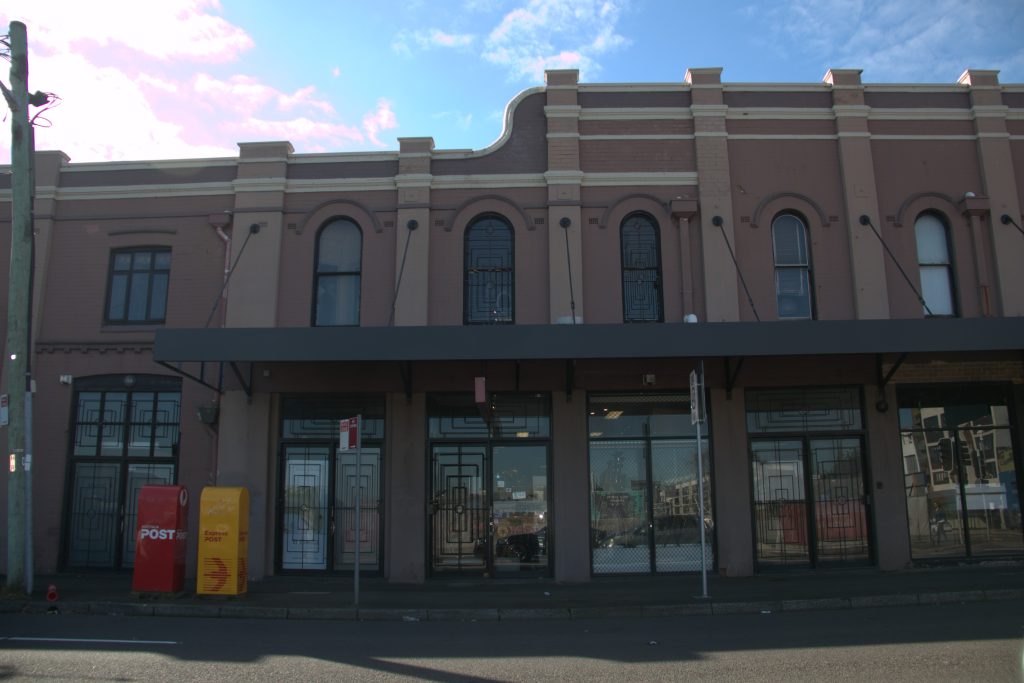
Inner West Awning Repairs & Shop Awnings: Council Compliance Guide A Complete Remediation and Engineering Roadmap for Sydney Commercial Property Owners The underside of a steel-framed awning, showing the structural bracing that keeps it up. A closer view of the heritage brick building and its long canopy awning in Camperdown. Shop Awning Repairs Across the Inner West We repair, restore and build shop awnings across Sydney’s Inner West, from King Street in Newtown and Enmore Road to Marrickville Road, Norton Street in Leichhardt, Darling Street in Balmain, and the shopping strips of Annandale, Petersham, Dulwich Hill, Summer Hill and Ashfield. Many of these streets sit in heritage conservation areas, so we match original details like pressed metal soffits, timber fascias and posted verandahs. See our guides to Newtown’s heritage awnings and heritage awning repairs. We’re based in nearby Rosebery, and every job is carried out by our licensed building team, with engineer certification where council requires it. Book a free on-site inspection, or read on for how Inner West Council’s awning safety process works. Executive Summary: Commercial property owners and building managers in the Inner West Council LGA must ensure all street awnings over footpaths strictly comply with statutory safety orders. This guide outlines the exact 4-phase audit, engineering, and remediation workflow required under NSW planning regulations and local council programs. Phase 1: Initial Response & Audit Verification (Days 1–14) Verify Council Notification & Statutory Deadlines: Note the date stamped on your official audit letter issued under the Council Awning Safety Program. Under council rules, you must submit an initial structural engineer’s report and defect schedule within 2 months of the letter’s issue date before any physical repairs commence. Review Legal Responsibilities: Acknowledge your statutory obligations under Section 142(1) of the Roads Act 1993 (NSW) and Section 124 of the Local Government Act 1993 (NSW), which mandate that building owners maintain overhanging structures in a safe condition. Immediate Risk & Public Safety Controls: Inspect for active hazards such as visible sagging, cracking masonry at anchor points, or water pooling. If your awning shows signs of immediate structural risk, contact council within 24 hours and secure the footpath. Ensure your commercial building holds a minimum of $20 million in Public Liability Insurance noting council interest, as mandated by the Inner West Outdoor Dining & Footpath Guidelines. Shop Awning Repairs Sydney project in Camperdown Phase 2: Professional Structural Assessment (Days 15–30) Retain a Qualified Engineer: Commission a chartered structural engineer registered on the National Engineering Register (NER). Execute Inspection Scope: Instruct your engineer to inspect the awning in accordance with ACSE Practice Note 18: Inspection & Assessment of Existing Tied Awnings and NSW Planning Circular BS 17-001. Expose Hidden Elements: Arrange temporary removal of ceiling soffit panels or roof sheeting so the engineer can inspect internal steel joists, box gutters, timber framing, and masonry anchor plates. Key Critical Inspection Points: Evaluate external tie-rods, eye-bolts, and turnbuckles for corrosion or fatigue; check connection points to primary building masonry or steel columns; and audit internal water drainage to prevent structural overload during storm events. Click here Phase 3: Documentation & Council Submission (Days 31–60) Structural Findings & Certification Options: If structurally sound, secure a Certificate of Structural Adequacy valid for up to 5 years and submit it via the Inner West Council Online Portal. If defects are identified, obtain a formal Defect Rectification Schedule detailing required structural repairs. Submit Schedule to Council: Lodge your engineer’s defect report with Inner West Council Development Compliance prior to starting any construction work. Phase 4: Remediation, Permits & Final Certification (Post-Submission) Engage Licensed Commercial Specialists: Appoint a specialized commercial builder such as Shop Awning Repairs Sydney (Inline Building, Builder Licence No. 196494C, Class 2 Building Practitioner). Secure Footpath & Road Occupancy Permits: Apply for road opening or temporary hoarding permits if your contractors require scaffolding or elevated work platforms above the footpath. Verify Dimensional Standards: Ensure all repaired or replaced structures maintain a minimum vertical clearance of 2.6 metres above the footpath and sit 300 mm to 600 mm back from the kerb line, in accordance with the Leichhardt Development Control Plan. Sign-off & Penalty Avoidance: Have your structural engineer perform a final inspection upon completion of works and issue a final Structural Certificate. Submit the certificate to close out your safety audit file. Completing these steps prevents Council from issuing on-the-spot fines of $3,000 for individuals or $6,000 for corporations, alongside potential Land and Environment Court proceedings. Summary of Statutory Frameworks & Citations Regulatory Framework / Standard Key Obligation / Relevance Roads Act 1993 (NSW) s 142(1) Mandates property owner legal liability for structures overhanging public roads/footpaths. Local Government Act 1993 (NSW) s 124 Grants Council enforcement powers to issue Orders to alter, repair, or demolish unsafe structures. ACSE Practice Note 18 / Planning Circular BS 17-001 Defines the mandatory technical inspection scope for tied commercial awnings and tie-rod testing. Leichhardt Development Control Plan Establishes physical dimensional standards: minimum 2.6 metres height clearance and 300 mm to 600 mm kerb setback. Related Reading Awning Repairs in Sydney: Problems We Fix and How It Works The Significance of Newtown’s Heritage Awnings Navigating Council Awning Safety Orders in Sydney: A Guide for Commercial Landlords Do You Need Council Approval for a Shop Awning in Sydney? Or head to our services page to see the full range of repair, maintenance and installation work we handle. For commercial premises and shopping strips, see our commercial awnings page. Source: NSW Planning Circular BS 13-001: Safety of Awnings over Public Lands (NSW Department of Planning and Environment).
The Significance of Newtown’s Heritage Awnings
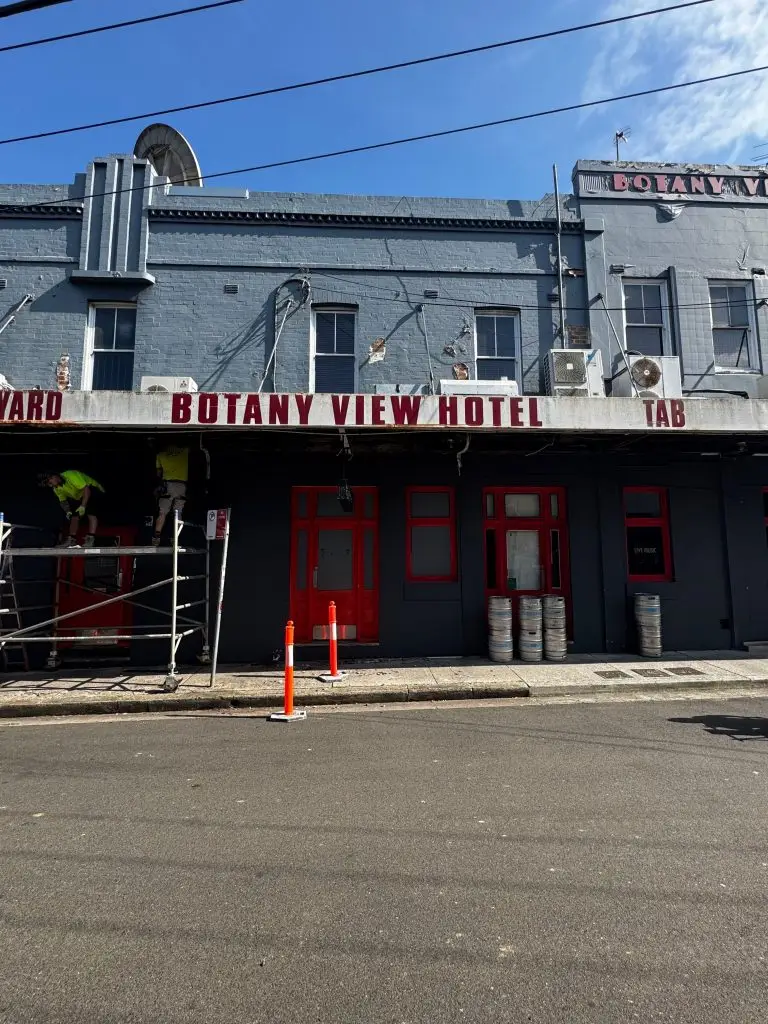
Heritage Awnings Sydney: The Significance of Newtown’s Shopfronts Walk along King Street in Newtown and one feature ties the streetscape together: the continuous line of shopfront awnings sheltering the footpath. These awnings are more than weather protection. They are a defining part of one of Australia’s most intact Victorian and Federation eras shopping strips, carrying real historical, architectural and social value. One of Australia’s most complete Victorian shopping strips Newtown grew rapidly in the late nineteenth century as the railway pushed development south, leaving a dense run of late Victorian and Federation commercial buildings along King Street and Enmore Road. The strip is widely regarded as one of the longest and most complete precincts of its period in the country, with hundreds of original shopfronts still standing (see Inner West Council and Wikipedia). Newtown owes that shopping strip to the railway. Newtown railway station opened in 1855 as one of the original stops on the Sydney to Parramatta line, and the suburb grew so quickly around it that by 1892 Newtown was Sydney’s fourth most populous suburb. King Street, running from the station down toward St Peters, became one of the first true suburban shopping strips outside the city centre, and traders built two and three storey Victorian and Federation shops with awnings over the footpath as a matter of course (see Newtown railway station, Wikipedia). Combined with neighbouring Enmore Road, the strip now runs for roughly 9 kilometres and takes in more than 600 shopfronts, widely regarded as the longest and most complete run of Victorian and Federation era shops in Australia. Hundreds of these shopfronts still carry their original or early awnings, which is why the strip reads so consistently from one end to the other. Click here A nighttime street view of shopfronts and awnings in Newtown. A corner pub building on Enmore Road, with a red awning over the ground-floor entrance. From posted verandas to cantilever awnings The earliest shelters were posted verandas of timber and iron, with decorative metalwork and pressed metal soffits, held up by posts at the kerb. Through the twentieth century many were replaced with cantilever awnings that hang from the building face without posts. Both forms are now part of the heritage record, and surviving original awnings are treated as significant fabric worth protecting. Look closely at King Street and Enmore Road and you can still read the mix of architectural styles in the shopfronts and the awnings sitting on them: Victorian Italianate and filigree facades with cast-iron lacework brackets and decorative parapets, alongside later Federation Free Classical fronts with simpler pressed metal awnings and rendered detailing. It is this mix, more than any single style, that gives the strip its heritage value. Why Newtown, specifically, matters for heritage awnings Sydney has plenty of individual heritage-listed shopfronts, but very few places have kept an entire streetscape of them intact. Newtown’s significance is not really about any one awning, it is about the density and continuity: walk the length of King Street and Enmore Road and the awning line barely breaks for nine kilometres. That scale is what separates Newtown from a general discussion of heritage awning styles. Bullnose, gabled and colonial verandas exist all over Sydney as isolated examples. Newtown is one of the few places where you can see them working together, block after block, as a single historic streetscape. Why the awnings matter Architecturally, the awning line gives the street its rhythm and human scale. Socially, these awnings have sheltered shoppers and traders for over a century. Practically, they still keep rain and harsh sun off pedestrians and shop windows. Losses such as removed balconies are recognised as a genuine erosion of the area’s character, which is why what remains is valued so highly. Protected by heritage controls Newtown’s main streets sit within heritage conservation areas managed by Inner West Council and, at the north end of King Street, the City of Sydney. The Inner West section falls within Heritage Conservation Area C71, Enmore-Newtown, and is further guided by the former Marrickville Development Control Plan 34, King Street and Enmore Road Heritage and Urban Design, which sets out specific controls for awnings and verandas and for shopfront design. Controls aim to protect original significant shopfronts and awnings, and a dedicated heritage paint scheme guides colours above awning level. Where posted verandas survive, they must stay self-supporting if a post is removed, with details certified by a qualified engineer. Caring for a heritage awning Looking after a heritage awning means respecting both its history and its structure. Rust in fixings, corroded steel and tired pressed metal can all undermine a verandah that has stood for generations. Sympathetic repair rather than wholesale replacement keeps the original character intact while restoring strength and safety, and regular inspection and certification help these awnings last another century. Because Newtown’s shopfronts are so visible and so consistently heritage-listed, even small repairs are worth planning properly rather than patching reactively. If you own or manage a heritage shopfront in Newtown or the wider Inner West, Shop Awning Repairs Sydney can inspect, certify and restore your awning in keeping with its heritage value. Get in touch to arrange an inspection or quote. Sources and further reading Newtown railway station, Wikipedia Former Marrickville DCP 34, King Street and Enmore Road Heritage and Urban Design Inner West Council, Enmore and Newtown Heritage Conservation Area Inner West Council, Heritage Conservation Areas City of Sydney, Heritage paint scheme for King Street and Enmore Road City of Sydney, Heritage conservation areas repainting guidelines Newtown, New South Wales, Wikipedia Related Reading Heritage Awning Styles Inner West Council Awning Safety Compliance Guide & checklist Asbestos in Shop Awnings: What Sydney Property Owners Need to Know Pub and Hotel Awnings in Sydney: Repairs, Heritage and Outdoor Areas Or head to our services page to see the full range of repair, maintenance and installation work we handle. A retail shop awning on a King Street, Newtown building.
