Awning damage falls into two categories: fabric/cosmetic and frame/structural. Which category applies determines whether repair is viable or replacement is required.
Fabric and Cosmetic Damage
Tears, loose seams, UV fading, staining and surface rust on visible hardware are generally repairable, patched, re-stitched, cleaned or spot-replaced, without affecting the frame. If the underlying structure is sound, repair is the appropriate response.
Frame and Structural Damage
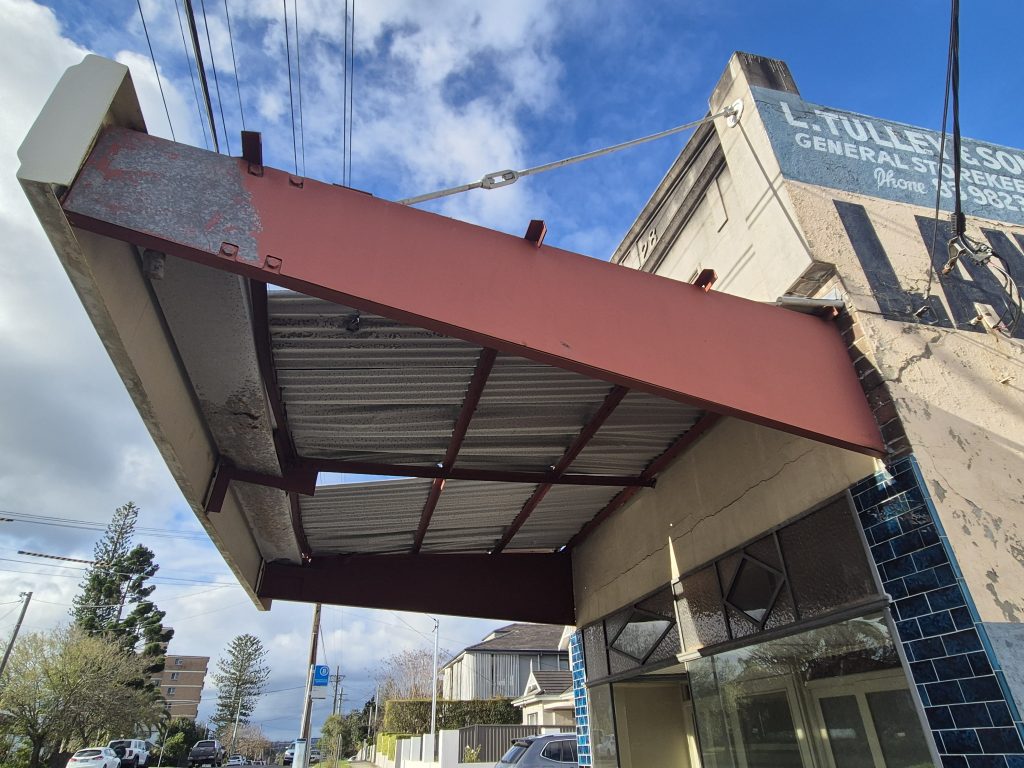
Bent support arms, corroded brackets, worn tie rods and cracking at weld points affect load capacity, not just appearance. Localised corrosion or minor misalignment is typically repairable. Extensive rust, corrosion or genuine structural compromise is not, repair in these cases is a temporary fix on a problem that will resurface.
Cost and Frequency Thresholds
Repeated repairs on the same awning within a short period indicate the structure is past economical repair. Recurring water damage or mould after cleaning points to an underlying drainage or structural fault, not a cleaning issue, and warrants inspection rather than further cleaning.
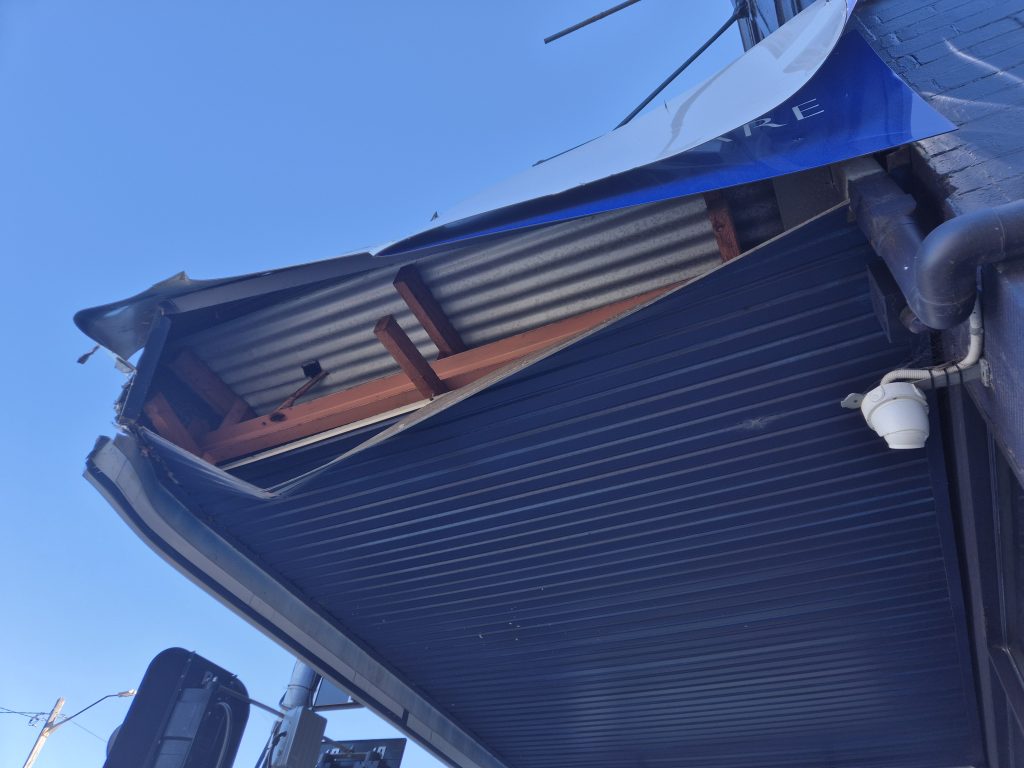
Awning Damaged by Heavy Vehicle
Certification-Driven Replacement
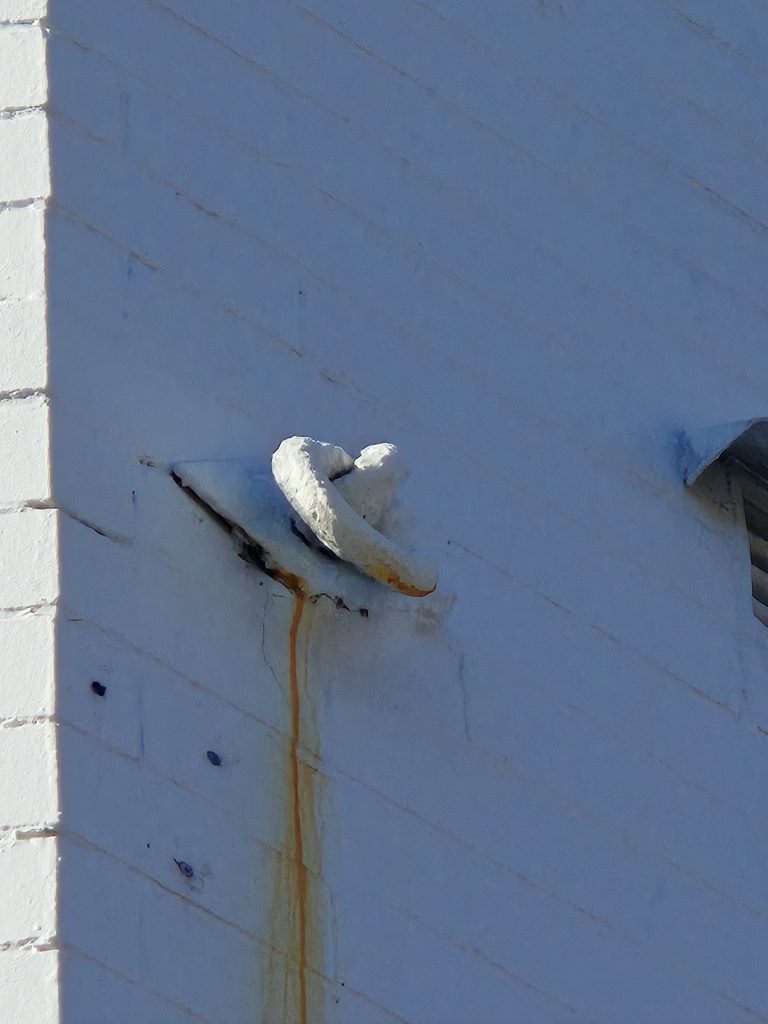
Where a structural inspection identifies load-bearing corrosion, tie rods outside safe tension, or eye bolts failing proof-load testing, this is a compliance issue rather than a discretionary repair decision. The awning cannot remain in service until the fault is rectified or the unit is replaced.
Heritage Considerations
Heritage-listed buildings require restoration using matching materials and profiles rather than default replacement, even where replacement would otherwise be simpler. This must be established before assuming replacement is the correct path.
A structural inspection, assessing frame, fixings and structural components separately from fabric condition, is the only reliable way to determine which category applies.


2 Responses