
Sydney's storm season typically runs from November through March, bringing severe thunderstorms, damaging hail and wind gusts that regularly exceed 90km/h. For shop and business owners, this is the time of year when a shopfront awning earns its keep: well-built shelter awnings protect customers, stock and signage from the worst of the weather. But that protection only holds up if the awning itself is storm-ready.
Every year we see the same pattern: awnings that looked fine in April fail in the first big November storm, because small issues (a loosened fixing, a blocked drainage channel, a rust spot nobody noticed) had months to get worse. This guide covers what actually causes awning failures in a Sydney storm, how to check yours before the season starts, and what to do if it's already too late.

Sydney's storm season brings severe thunderstorms and damaging winds most years between November and March.
Why Storm Season Is Hard on Commercial Awnings
A shopfront awning is essentially a large sail bolted to the front of a building, and storm season tests every part of that structure at once:
- Wind loading. Cantilevered and tie-rod awnings are engineered for a specific wind rating, but corrosion, loose fixings or an undersized original installation can push a structure past its safe limit well before the wind does.
- Hail impact. Polycarbonate and older fabric awnings are the most vulnerable to hail damage, which can puncture the surface or crack support ribs.
- Water pooling. Blocked gutters and drainage channels let water pool on the awning surface, adding weight exactly when the wind is trying to lift the structure.
- Accelerated corrosion. Heavy, repeated rain finds every weak point in a frame's protective coating. An awning that isn't hot-dip galvanised will rust fastest at welds, fixings and any point the paint has chipped.
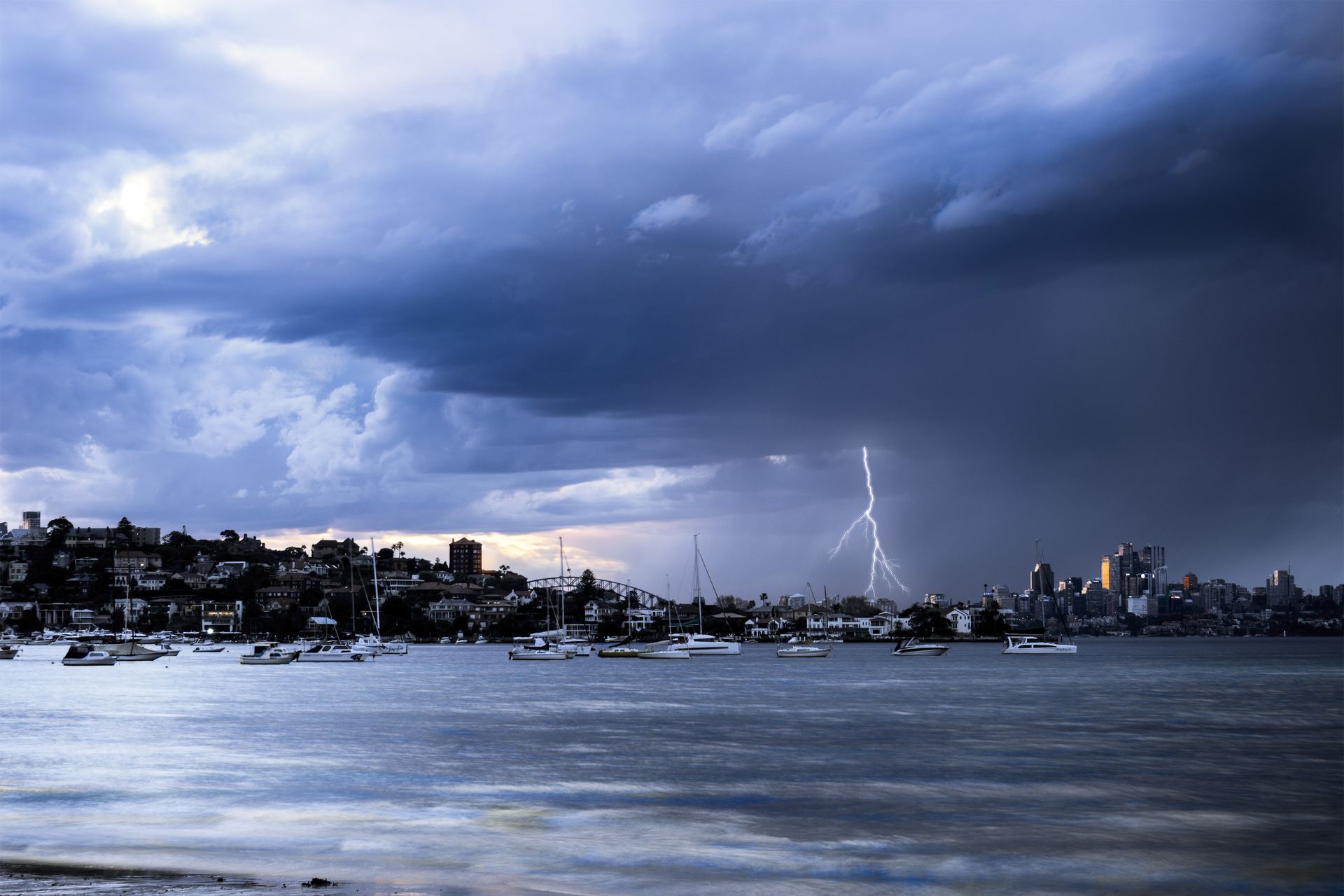
Lightning storm rolling in over Sydney Harbour, the kind of system that tests every fixing on a shopfront awning.
Pre-Season Inspection Checklist
Before storm season sets in, walk your awning through this checklist, or use our free 60-second awning safety check for a quick read on whether it's worth booking a professional inspection.
- Fixings and eye bolts. Check for movement, rust staining, or any fixing that looks looser than the rest.
- Tie rods. Look for sagging, bent rods, or corrosion at the clevis and turnbuckle connections.
- Drainage. Clear leaves, debris and silt from gutters and downpipes so water can't pool on the awning surface.
- Fabric and cladding condition. Look for tears, brittle patches, or delamination that hail or wind could turn into a bigger failure.
- Rust and corrosion. Surface rust on an older awning is often a sign of deeper corrosion at welds and fixing points; this is exactly what our awning maintenance guide covers in more detail.
Awnings more than 10 years old need a professional engineer's inspection under most Sydney council rules regardless of season. Storm season is simply the moment that makes any existing weakness obvious.
What to Do Before a Storm Hits
Once a severe thunderstorm warning is issued for Sydney, there's usually only a short window to act:
- Retract any motorised or manual retractable awnings, since an extended fabric awning acts like a sail in high wind.
- Clear gutters and drainage points of any debris that's built up since your last check.
- Secure or remove any loose signage, banners or decorations attached to the awning frame.
- Take dated photos of the awning's condition: useful evidence if you need to make an insurance claim afterward.
If Your Awning Is Damaged in a Storm
If a storm does cause damage, don't wait to assess it. A compromised awning over a public footpath is a genuine safety risk, and in NSW, responsibility for that risk sits with the owner, not the council, and non-compliance can mean fines of up to $6,000. Our guide on navigating council awning safety orders covers what happens if council flags your awning after a storm.
Next steps depend on the extent of the damage:
- For anything beyond minor cosmetic damage, get a professional structural assessment before the awning is used or trusted again. See our guide on repair vs. replace: assessing awning damage.
- If the damage is storm-related, most commercial insurance policies will cover it. Our insurance claim support guide walks through what insurers typically ask for.
- Storms aren't the only cause of sudden awning damage. A similar assessment process applies if a vehicle or falling branch hits your awning.
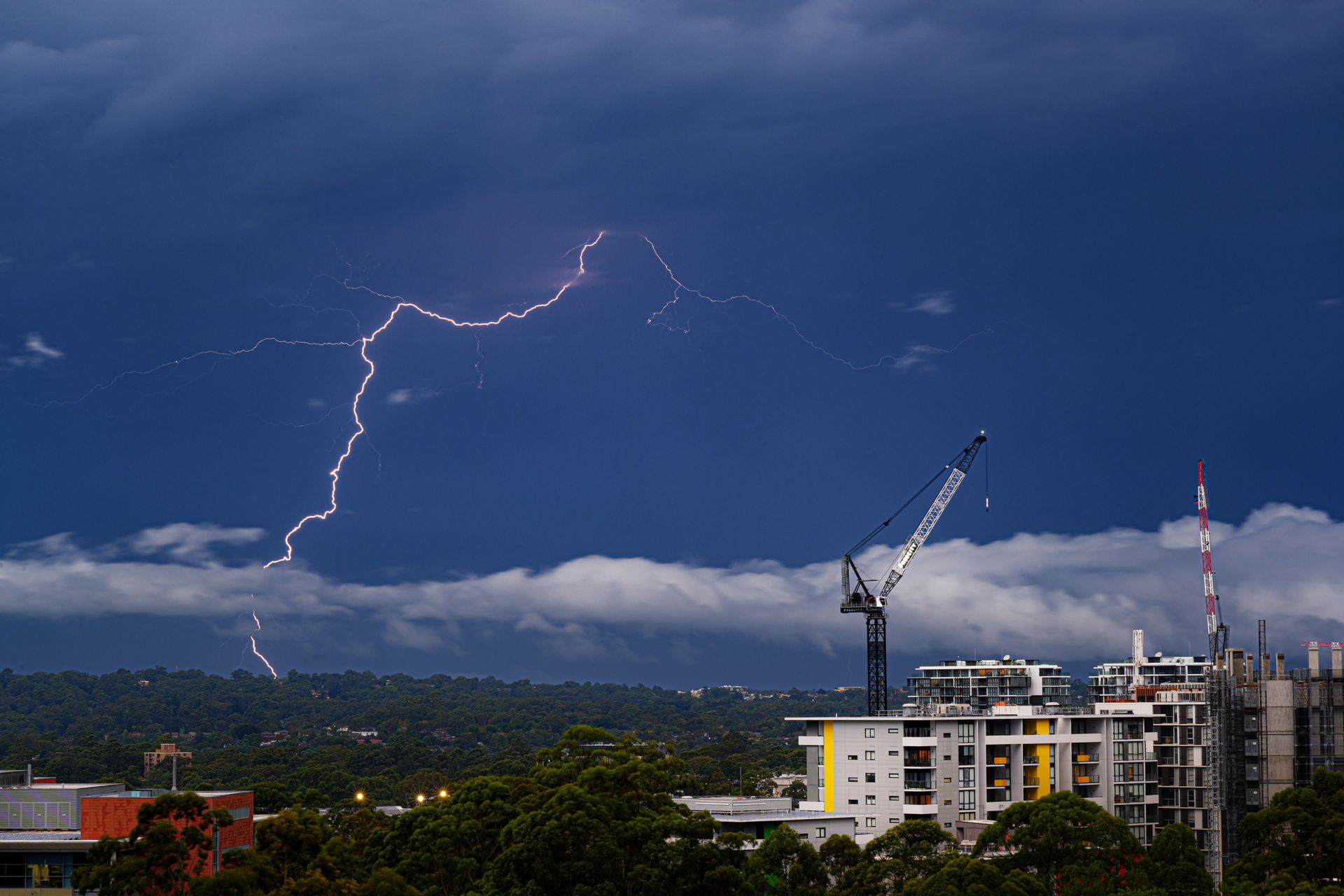
Storm cells like this one are exactly why an annual pre-season check matters more than a one-off installation inspection.
Building Storm Resilience Long-Term
Shelter awnings are only as strong as their weakest fixing point, which is why we build and repair every awning around a few non-negotiables: hot-dip galvanised steel framing for genuine corrosion resistance, properly specified tie-rod systems rather than undersized fixings, and drainage that's designed in from the start rather than added as an afterthought.
If you're planning a new installation or a major repair before storm season, it's worth reading our guide on the materials and construction standards we use for commercial shelter awnings across Sydney. The difference between an awning that survives ten storm seasons and one that doesn't usually comes down to what's happening at the frame and fixings, not the fabric on top.
Book a Pre-Storm-Season Inspection
The cheapest storm-season repair is the one you make in October, not the one you're forced into after a November storm. If it's been more than a year since your awning was professionally checked, get in touch to book an inspection before the season starts.


One Response