
Awning damage falls into two categories: fabric/cosmetic and frame/structural. Which category applies determines whether repair is viable or replacement is required.
Fabric and Cosmetic Damage
Tears, loose seams, UV fading, staining and surface rust on visible hardware are generally repairable, patched, re-stitched, cleaned or spot-replaced, without affecting the frame. If the underlying structure is sound, repair is the appropriate response.
Frame and Structural Damage
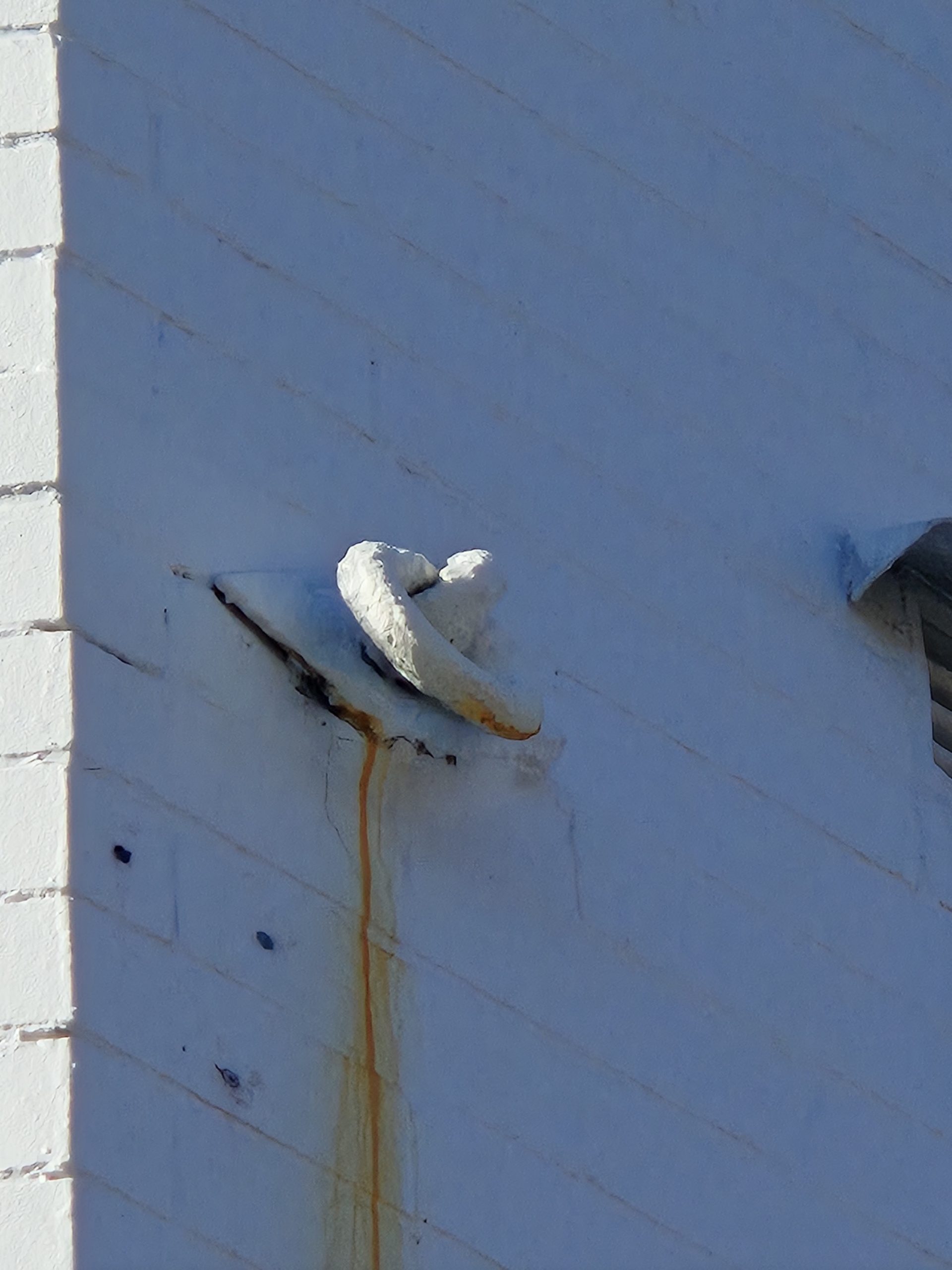
Bent support arms, corroded brackets, worn tie rods and cracking at weld points affect load capacity, not just appearance. Localised corrosion or minor misalignment is typically repairable. Extensive rust, corrosion or genuine structural compromise is not, repair in these cases is a temporary fix on a problem that will resurface.
Cost and Frequency Thresholds
Repeated repairs on the same awning within a short period indicate the structure is past economical repair. Recurring water damage or mould after cleaning points to an underlying drainage or structural fault, not a cleaning issue, and warrants inspection rather than further cleaning.
Certification-Driven Replacement
Where a structural inspection identifies load-bearing corrosion, tie rods outside safe tension, or eye bolts failing proof-load testing, this is a compliance issue rather than a discretionary repair decision. The awning cannot remain in service until the fault is rectified or the unit is replaced.
Heritage Considerations
Heritage-listed buildings require restoration using matching materials and profiles rather than default replacement, even where replacement would otherwise be simpler. This must be established before assuming replacement is the correct path.
Signs a Repair Is Still the Right Call
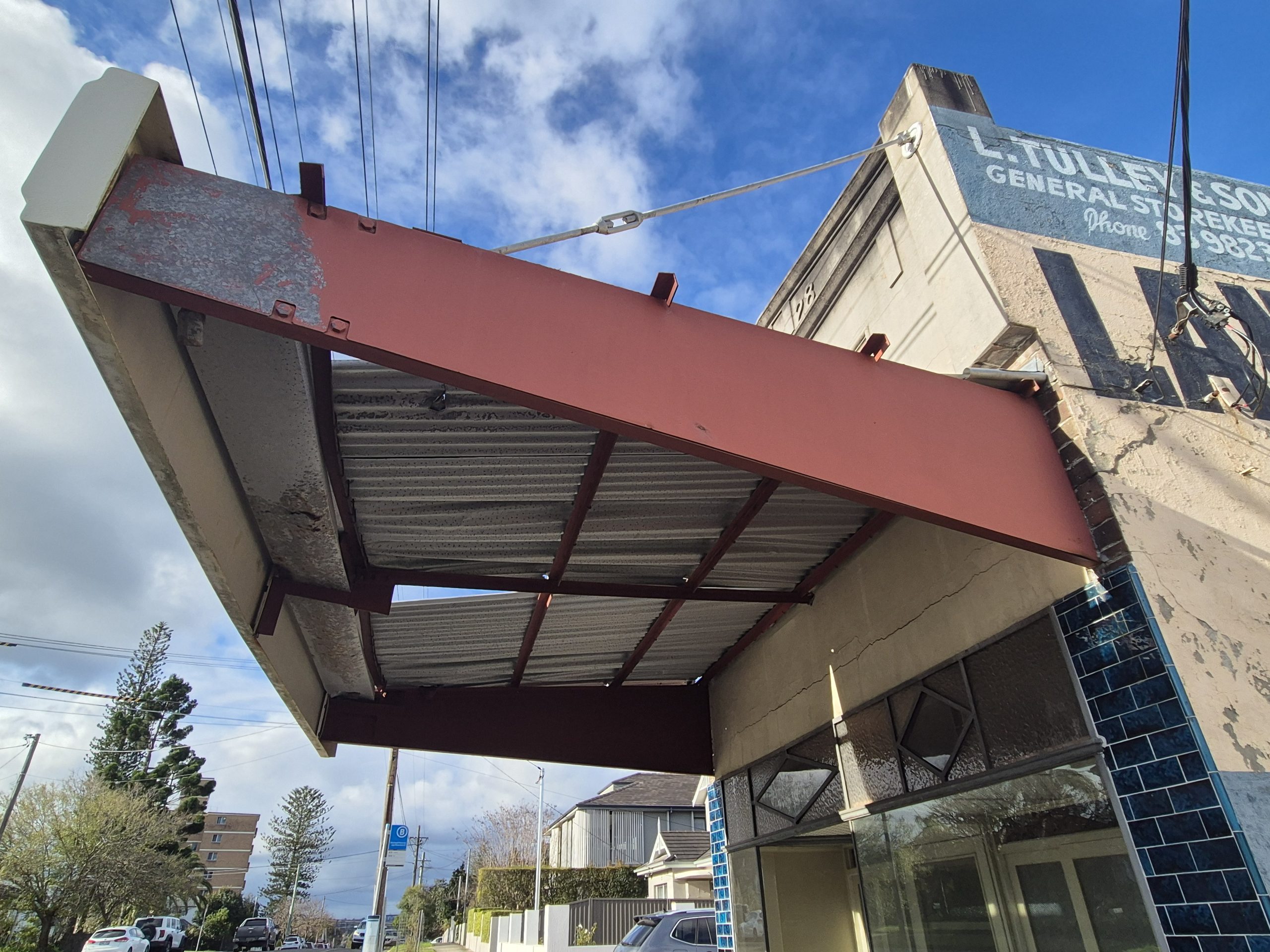
Most of the awnings we inspect across Sydney can be brought back to full condition with a targeted repair. Repair is usually the better option when:
- Rust is limited to surface staining or a single bracket, with no pitting or flaking steel underneath.
- One or two tie rods, eye bolts or fixings have failed, but the wall anchors and main frame are sound.
- Damage is confined to the cladding, fabric, fascia or box gutter after a storm or impact.
- The awning is under 20 years old and has been inspected and maintained along the way.
- The building is heritage listed and council expects the original structure to be conserved.
Most awning repairs are completed within a day, and a repaired awning can be engineer certified in the same way as a new one.
Signs It Is Time to Replace
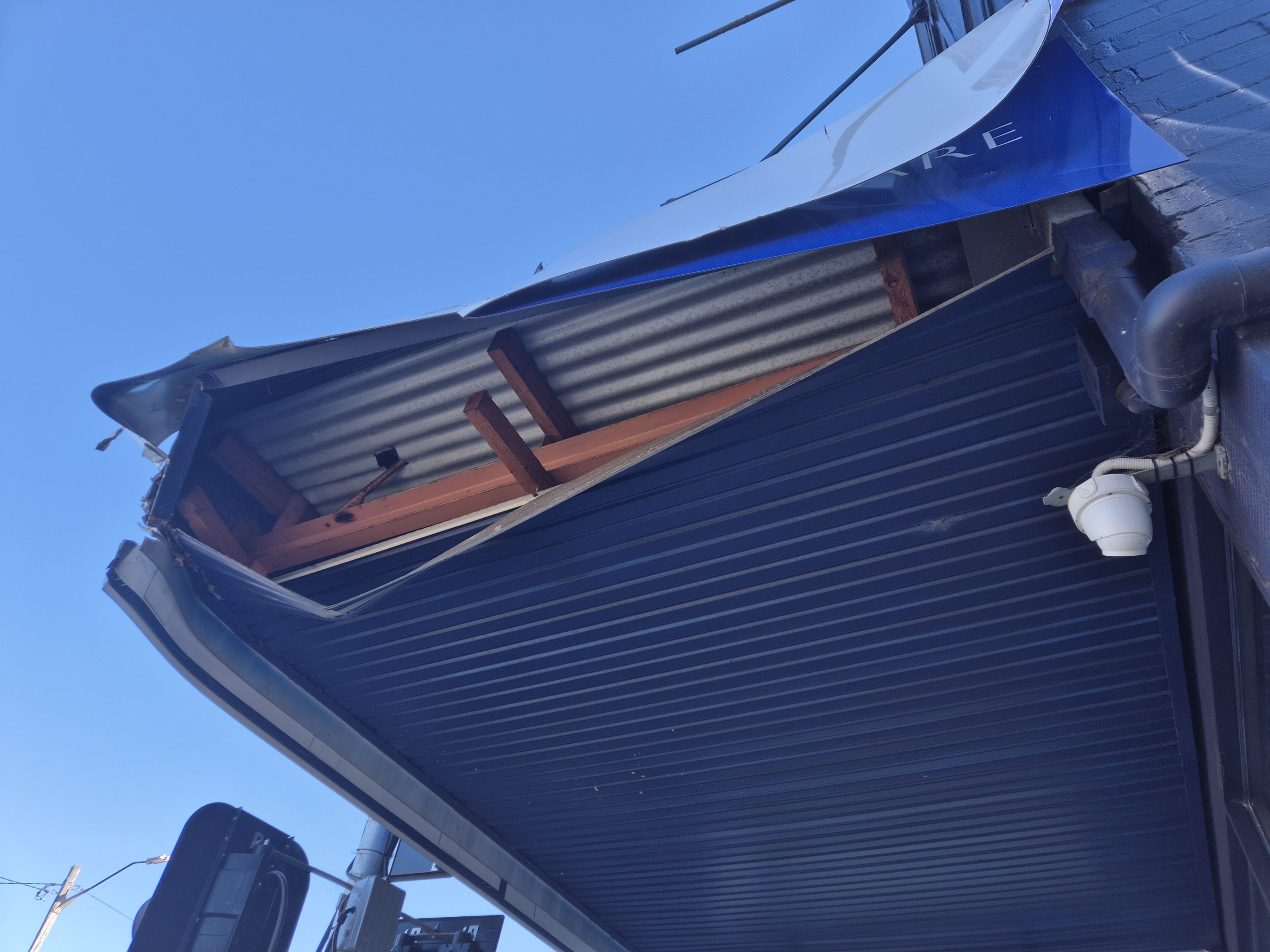
Replacement becomes the safer and more economical choice when the problem sits in the structure itself:
- Corrosion has eaten through the main frame, wall plate or anchor points, not just the visible hardware.
- The awning sags, moves in the wind or has pulled away from the wall.
- The roof sheeting contains asbestos cement and is cracked or deteriorating. See our guide to asbestos in shop awnings.
- You have paid for repeated repairs on the same awning within a few years.
- Council has issued a safety order and the engineer cannot certify a repair.
What Awning Replacement Involves
If an inspection shows your awning needs replacing, here is what a typical awning replacement in Sydney looks like:
- Inspection and design: we measure the existing awning, check the wall and anchor points, and design a replacement that suits your building, signage and council requirements.
- Engineering and approvals: a structural engineer specifies the new frame and fixings, and we arrange council and footpath approvals. See do you need council approval for a shop awning.
- Safe removal: the old awning is taken down with the footpath protected, including licensed removal if the sheeting contains asbestos.
- Installation: the new frame, tie rods or brackets, roof sheeting, gutters and fascia go up, usually scheduled around your trading hours.
- Certification: final engineer sign-off and paperwork for council, your insurer or strata.
A full replacement costs more up front than a repair, but it resets the clock on corrosion and compliance. For typical prices, see our shop awning installation cost guide, or book a free on-site inspection for a quote on your awning.
Questions to Ask Before You Decide
Before committing either way, it helps to answer a few practical questions. How old is the awning, and when was it last professionally inspected? Is there a council notice or insurance claim involved, and what does it require? Are you planning a shopfront refit or rebrand in the next few years, which might make a new awning the better investment now? And is the building in a heritage conservation area, where replacement may need council approval?
If rust is the main concern, our guides to rusted tie rods and metal awning corrosion explain what to look for. If your awning is leaking, read why shop awnings leak and how to fix them.
Getting the Right Answer
A structural inspection, assessing frame, fixings and structural components separately from fabric condition, is the only reliable way to determine which category applies.
Contact Shop Awning Repairs Sydney for an inspection and written quote on repair versus replacement.
Related Reading
Or visit our awning services page for more on repairs, maintenance and installations.