
Taking down a shop awning looks simple from the footpath. In reality it is one of the riskier jobs on a shopfront: a heavy, ageing structure, fixed into an old facade, hanging directly over people walking past. Whether the whole awning is coming off, being cut back, or being stripped back for repairs, the way the work is planned decides whether it goes smoothly or ends in damage, fines or an accident.
This guide explains when awnings need to be removed or partly demolished, what approvals are involved in Sydney, how the footpath is kept safe, and what should be left behind when the job is finished.
When an Awning Needs to Come Down
Full removal is not always the answer. Most awnings can be repaired, and our guide to repairing or replacing an awning explains how to tell. Removal or partial demolition usually comes up for one of these reasons:
- The structure has failed. Corrosion through the main frame, failed fixings into the building or badly rusted tie rods can make an awning unsafe to keep.
- A council order. Council can require an unsafe awning to be repaired, made safe or removed. Our guide to council awning safety orders covers how that process works.
- A new shopfront or renovation. Refits often replace the old awning with a new one designed for the new frontage.
- Street works. New smart poles, light rail, kerb changes or street trees can mean an awning has to be cut back or modified.
- Vehicle or storm damage that has left part of the awning unsafe.
Full Removal, Strip Out or Cut Back?
“Demolition” covers several different jobs, and each needs a different plan.
- Full removal takes the whole awning off the building: roof sheeting, frame, fascia, tie rods and brackets. The facade is then made good, or a new awning is installed.
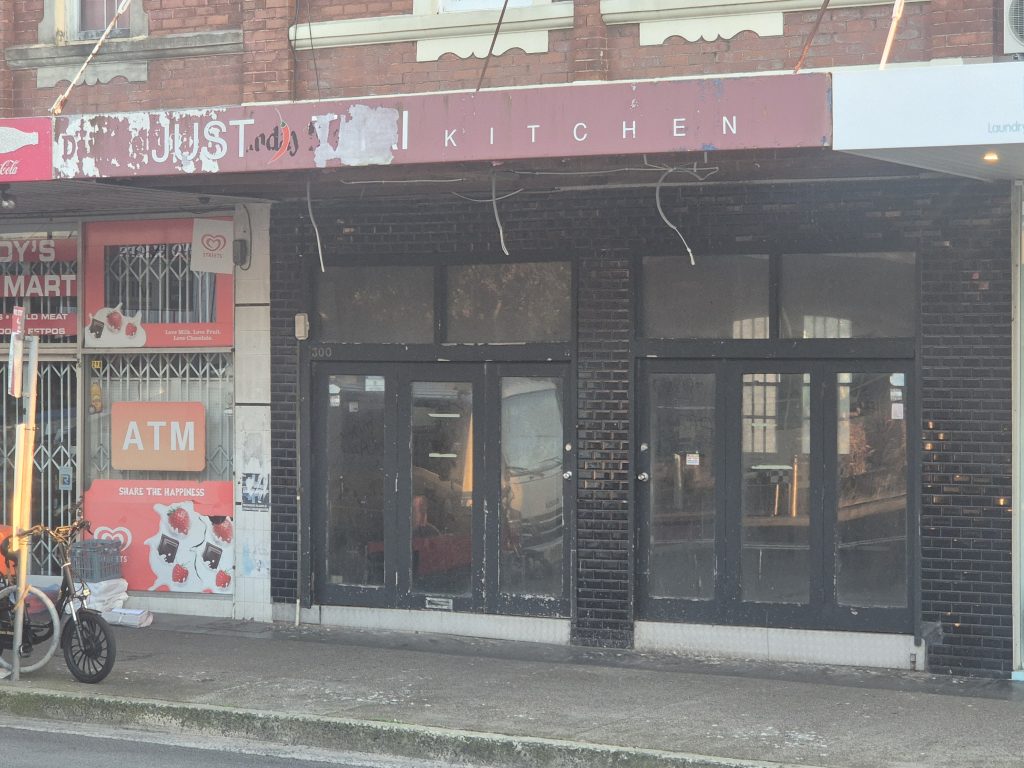
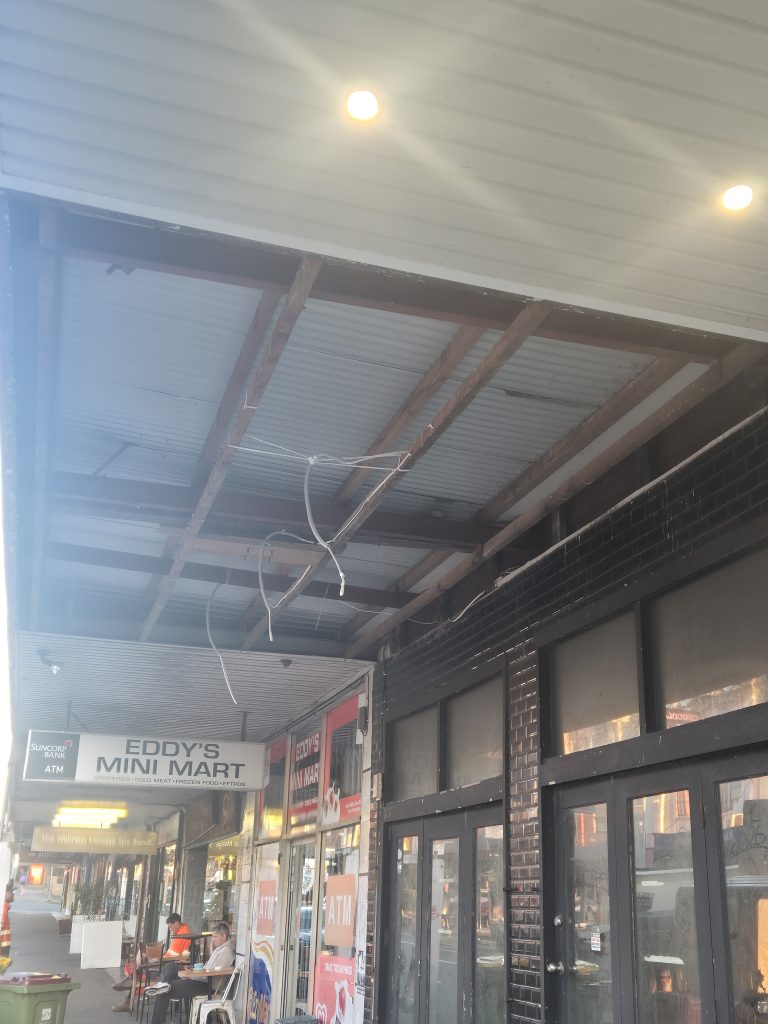
- Strip out removes part of the awning, most often the soffit linings underneath, so the hidden frame can be inspected and repaired. This is what we did at 300 Bondi Road, where rotted linings were falling away above the footpath.
- Cut back shortens the front of the awning so it sits further from the kerb, usually to clear new poles, trees or a widened traffic lane.
- Pole cut out modifies a small section of the awning around a single pole or sign. Some councils, including the City of Sydney, discourage cut outs and prefer the whole awning set back instead.
Cut backs and cut outs are structural changes, not trims. Shortening an awning changes how the tie rods and fascia beam carry the load and where the water drains, so the modified awning should be checked by a structural engineer and certified. Our guide to awning height and kerb setback rules explains the dimensions councils expect.
Approvals and Permits in Sydney
Because an awning sits over a public footpath, removing or modifying it usually involves council even when the building work itself is straightforward. Depending on the council and the scope, you may need:
- Consent under section 138 of the Roads Act 1993 for works on or over the footpath
- A hoarding, work zone or footpath occupation permit, and a traffic control plan if a lane or loading zone is affected
- Development consent or heritage approval if the building is heritage listed or in a heritage conservation area, since councils often want heritage awnings kept and repaired rather than removed
- Engineering drawings and certification for any cut back, or for a replacement awning
Requirements vary between councils, so we confirm what applies to your address before work is booked. Our council approval guide for shop awnings has more detail on the different pathways.
Check for Asbestos First
Many awnings built before the late 1980s have asbestos cement soffit linings. If there is any chance the linings contain asbestos, they must be tested before demolition, and removal must be carried out by a licensed asbestos removalist with the right controls in place. Cutting or breaking suspect sheeting over a public footpath is exactly what the rules exist to prevent. Our guide to asbestos in shop awnings explains the process.
Keeping the Footpath Safe
The biggest risk on an awning removal is not to the workers. It is to the people walking underneath. A safe job usually includes:
- A fenced exclusion zone below the work, with hoarding or barriers and clear signs, so nobody walks under material being removed.
- A safe pedestrian route around the work zone, including for prams, wheelchairs and customers coming in and out of nearby shops.
- Controlled removal of sheeting and frame sections in pieces small enough to handle safely, with nothing dropped to the footpath.
- Timing around foot traffic. On busy strips the heaviest work is often done early in the morning, at night or on quieter days.
- Isolated services. Under awning lights, illuminated signs, CCTV and their wiring must be disconnected by a licensed electrician before anything is cut.
What Happens to the Building Afterwards
Removing an awning leaves the facade exposed where it was fixed. A finished job should include:
- Old tie rod anchors and brackets removed or cut back and sealed so water cannot get into the wall
- Fixing holes, flashings and any damaged brickwork or render made good
- Electrical and signage connections made safe or relocated
- If a new awning is going in, the new fixing points checked by an engineer before installation
If you are replacing the awning, see our awning replacement section and how we handle commercial awning construction.
Choosing Who Does the Work
An awning removal is building work over a public space, so it is worth checking that whoever you engage holds a current NSW builder licence and public liability insurance, can arrange the council permits and traffic management, and works with licensed asbestos removalists and electricians where needed. Ask for a written scope that covers removal, making good the facade and disposal, so there are no gaps between trades.
Frequently Asked Questions
Do I need council approval to remove a shop awning?
Usually, yes. Removing an awning over a public footpath generally needs council consent for the work over the road reserve, and often a hoarding or work zone permit. If the building is heritage listed or in a heritage conservation area, council may also need to approve the removal itself. Check with council before any work starts.
Can my shop stay open while the awning is removed?
In most cases, yes. With a properly fenced work zone, a clear and signed entry, and the noisiest work done early in the morning or outside trading hours, most shops keep trading while the awning is removed or stripped back.
What if my awning contains asbestos?
Many older awnings have asbestos cement soffit linings. If asbestos is suspected it must be tested, and removal must be done by a licensed asbestos removalist before the rest of the demolition goes ahead. Never cut, drill or break suspect linings yourself.
Need an Awning Removed or Cut Back?
We remove, strip out and cut back shop and street awnings across Sydney, and handle the permits, safety planning, making good and any replacement awning. Every job starts with a free on-site inspection and a written quote. Contact us to book a time.
Related Reading