
If your shop awning is still dripping well after the rain has stopped, that is not just runoff working its way out. It is usually a sign that water is getting in somewhere it should not, and that the problem will keep getting worse until it is fixed.
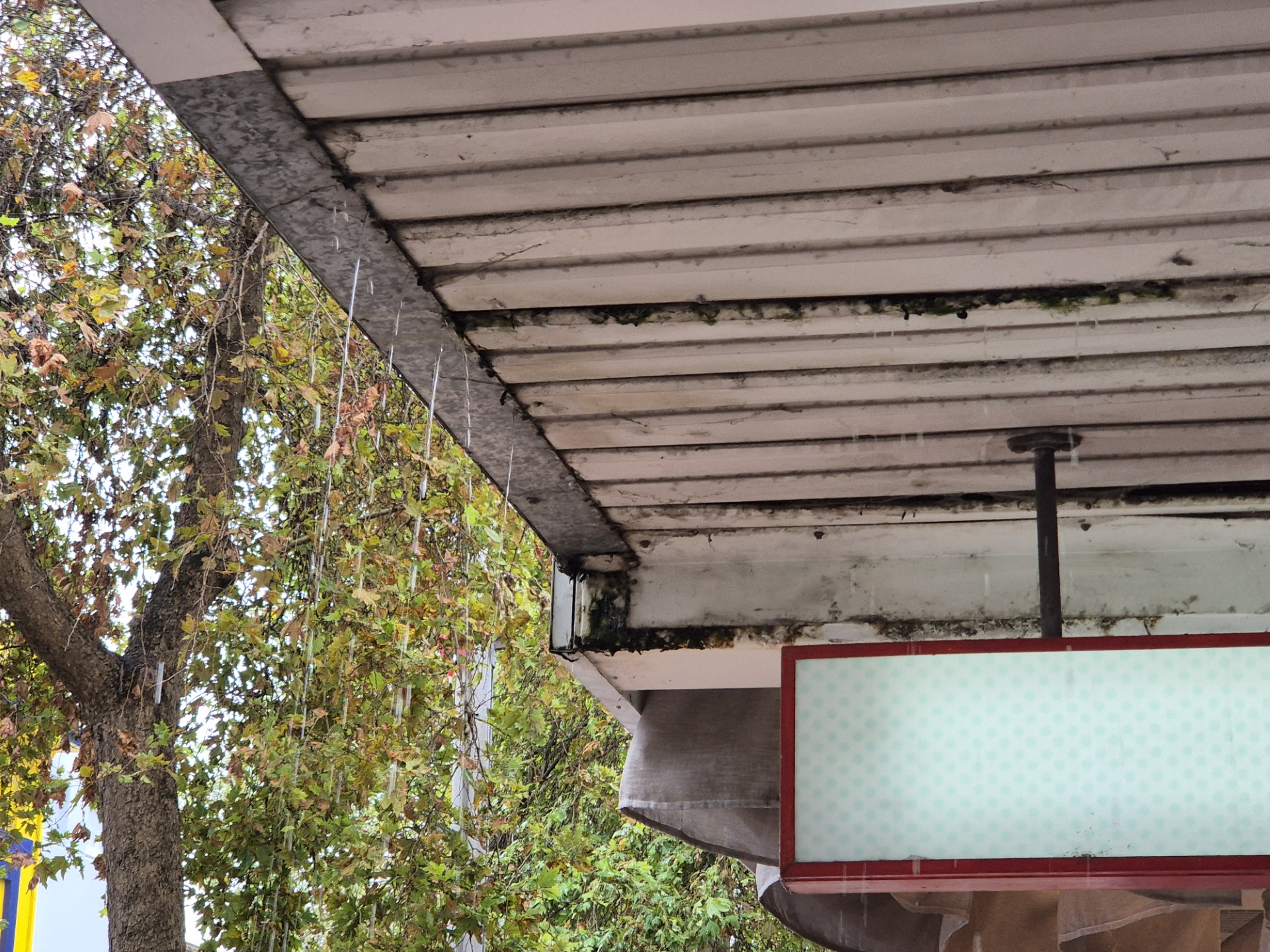
We see this pattern constantly across Sydney shopfronts: steady dripping from the frame edge long after a storm has passed, and thick black mold or algae staining running along the underside of the panels. Both point to the same thing, a structure that is no longer shedding water the way it was designed to.
The warning signs you’re looking at
Before getting into causes, it helps to know what you are actually seeing when an awning starts to fail. The two most common visual signs are:
- Persistent dripping. A brief drip during heavy rain is normal. Dripping that continues for hours after the rain stops means water has pooled somewhere inside the structure and is slowly finding its way out through a gap, seam, or corroded joint.
- Black mold and algae staining. This dark, often streaky staining along panel seams and frame edges is a sign that moisture is sitting in one spot for extended periods rather than draining away. Once mold takes hold, it spreads quickly in Sydney’s humid climate and will keep returning even after a surface clean unless the underlying leak is fixed.
What causes a leaking shop awning
Once you see dripping and staining together, the cause is almost always one of a handful of things. On metal and box-frame awnings, which make up a large share of Sydney shopfronts, we most commonly find:
- Failed sealant or flashing where the awning meets the building. This is the single most common leak point on a shopfront. Sealant has a working life, often five to ten years, and once it shrinks or cracks, water tracks straight down behind it and into the shop.
- Blocked or undersized box-awning guttering. Leaves, dust, and general debris build up in the internal gutter channel of a box awning over time. Once it is blocked, water has nowhere to go except over the edge or back up under the panels.
- Corroded fixing points. Bolts and brackets holding the frame together corrode faster in coastal, salt-air suburbs. A corroded fixing eventually opens a small gap that lets water in, even though the panel itself is intact.
- Incorrect pitch. An awning needs enough fall to shed water quickly. If the pitch is too shallow, or has shifted slightly due to structural movement, water pools on the panels instead of running off, and standing water finds every weak point eventually.
Fabric awnings leak for related but slightly different reasons. Their waterproof coating degrades under UV exposure over five to ten years, and stitched seams are a weak point that welded or heat-sealed seams do not have. A shallow pitch causes the same ponding problem on fabric as it does on metal panels.
Why you shouldn’t ignore it
A dripping, mold-stained awning is not just a cosmetic issue. Left alone, a few things tend to happen in sequence. Trapped moisture accelerates corrosion in the frame and fixings, which weakens the structure over time. Mold spreads from the awning itself onto signage, window frames, and the shopfront below, which is a much harder cleaning job than the original leak would have been. And if the awning sits over a public footpath, which most shop awnings do, a visibly deteriorating structure is exactly what draws council attention.
We have seen this play out firsthand. In one case, a council ranger was alerted to the poor condition of a specific awning and it took roughly two months from that report for the ranger to inspect the structure and issue a formal repair order. Two months might sound like breathing room, but it is not a guarantee, and a ranger’s timeline is not something a business owner controls. Under NSW law, responsibility for the safety of a street-facing awning sits with the property owner, not the council, and a formal safety order comes with a firm compliance deadline and the cost of urgent, rather than planned, repair work.
The better position is to get ahead of it. Fixing a resealed joint or a cleared gutter before it becomes a council matter is almost always cheaper and faster than fixing it under the pressure of a compliance order.
What we do to fix a leaking awning
Every leaking awning we inspect gets diagnosed before anything is repaired, because treating the visible symptom without finding the actual entry point means the leak comes back. Depending on what we find, the fix might be as simple as stripping old sealant back and re-flashing the wall junction, clearing and re-pitching a blocked box-gutter, or replacing corroded fixing points with marine-grade hardware suited to a coastal environment. For more advanced deterioration, that can mean replacing individual panels or sections of frame rather than the whole structure.
All of this is carried out under a licensed, insured scope of work, with a written report you can hand to your insurer, your landlord, or council if it is ever asked for. That documentation matters as much as the repair itself if the awning is ever queried again down the track.
Get it inspected before the next downpour
If your awning is dripping longer than it should, or you have noticed mold and staining building up along the frame, it is worth getting it looked at before the next heavy rain rather than after. We inspect, diagnose, and repair leaking shop and commercial awnings across Sydney, from a single resealed joint through to full panel replacement.
Contact Shop Awning Repairs Sydney for an inspection and a written quote, or read more about our full range of awning inspection, repair, and maintenance services.
