
Street awnings are the awnings that hang over a public footpath in front of shops, pubs, cafés and mixed use buildings. Thousands of people walk under them every day, which is why councils take their condition seriously and why repairs cannot be left for later. This guide explains who is responsible for repairing a street awning in Sydney, the problems we see most often, whether you need council approval, and what drives the cost of a repair.
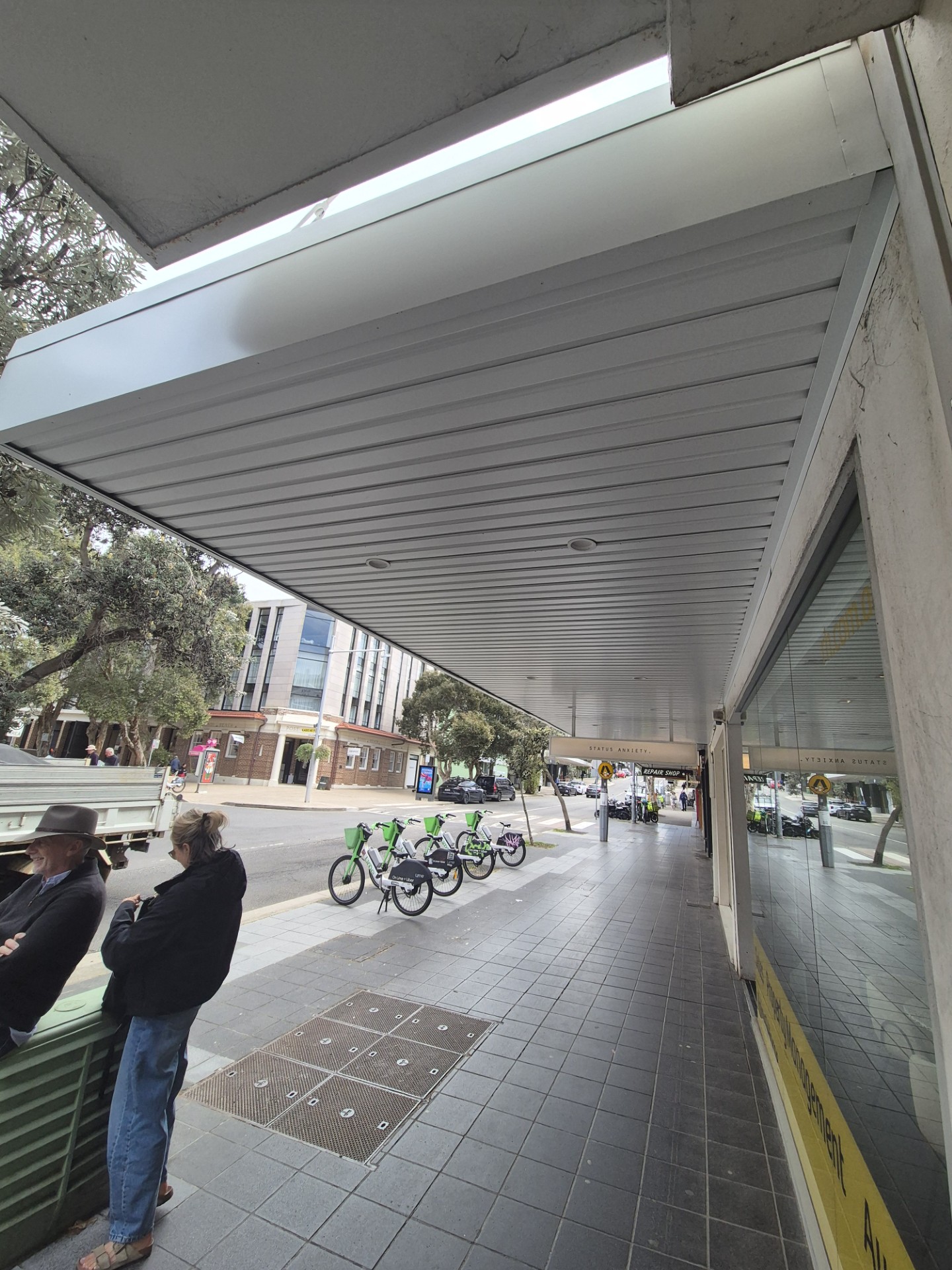
Who Is Responsible for Repairing a Street Awning?
In NSW, Section 142(1) of the Roads Act 1993 says the person with control of a structure over a public road must keep it in a satisfactory state of repair. A footpath is part of the road, so a street awning falls under this rule.
In practice that usually means:
- The building owner is responsible in most cases, because the awning is part of the building.
- Tenants can take on some or all of the maintenance if the lease says so. Check the repairs and maintenance clauses before you assume either way.
- Strata buildings: the awning is normally common property, so the owners corporation is responsible. Our strata and commercial awning compliance guide covers this in more detail.
The council does not repair private street awnings. Its role is to inspect them and, if it finds a problem, require the owner to fix it.
Common Street Awning Problems
Street awnings deal with weather, traffic and age all at once. These are the repairs we are called out for most often:
- Tie rods, eye bolts and wall fixings: rust where the rods meet the wall is one of the main causes of awning failure. See rusted tie rods: the hidden awning failure.
- Soffits and ceiling linings: stained, sagging or loose panels underneath the awning, often a sign of water getting in from above.
- Roof sheeting, gutters and flashings: leaks and blocked gutters that drip onto customers. Our guide to why shop awnings leak explains the usual causes.
- Frames and fascias: corroded steel and damaged fascia boards, especially near the coast. See metal awnings: rust and corrosion.
- Vehicle strikes: trucks and vans clipping the front edge of the awning. These need a make safe first, then a proper repair.
- Lighting and wiring: under awning lights that have failed or been damaged by water.
What Happens If a Street Awning Is Not Repaired?
Councils inspect street awnings, both on routine patrols and after complaints from the public. If an awning looks unsafe, the owner can receive a notice and then a formal order to repair it. Our guide to council awning safety orders walks through that process.
Enforcement is not always quick. In one case we know of, it took about two months from a complaint being made to a council ranger inspecting the awning and issuing a repair order. That delay is not a reason to wait. During that time the owner still carries the risk if something falls or someone is hurt, and insurers look closely at whether the owner knew about the problem.
Do Street Awning Repairs Need Council Approval?
It depends on the work. Straightforward maintenance and like for like repairs often do not need a development application. Work that changes the size, shape or structure of the awning usually does, and any awning over a footpath already sits under the Roads Act approvals described in our council approval guide for shop awnings.
Even when the repair itself needs no approval, working over a footpath often does. Scaffolding, hoardings or a work zone on the footpath usually need a permit from the council, and busy streets may need traffic or pedestrian control. We check these requirements as part of the quote so there are no surprises.
What Do Street Awning Repairs Cost?
Every street awning repair is priced on inspection, because the cost depends far more on the situation than on the size of the awning. The main factors are:
- Access: scaffolding, an elevated work platform, footpath permits and traffic control can be a large part of the cost on a busy street.
- Extent of damage: replacing one corroded tie rod is very different from replacing a whole soffit or frame.
- Materials: matching existing steel, sheeting or heritage details.
- Engineering certification: structural repairs over a footpath usually need an engineer’s sign off. Our awning cost guide suggests allowing around $500 to $1,500 for certification.
- Timing: work done early in the morning, at night or on weekends to avoid trading hours.
If the damage is serious, it is worth asking whether to repair or replace the awning. If it was caused by a storm or a vehicle, it may be covered by insurance: see our guide to awning damage insurance claims.
How We Handle a Street Awning Repair
- Free on-site inspection: we look at the awning from the footpath and above, and photograph the problems.
- Written quote: a clear scope of works, materials, access and any permits or certification needed.
- Make safe if needed: if the awning is a risk to the public, we secure it first. For urgent situations see emergency awning repairs.
- Repairs: scheduled to keep disruption to your business and the footpath as low as possible.
- Sign off: engineer certification where required, with the paperwork you need for council, your insurer or your strata.
If your street awning needs attention, book a free inspection or call us on 1300 595 116. You can also read more about our commercial and street awning repairs and awning services.