
Walk down any busy Sydney strip after dark and the shopfronts that draw people in are rarely the ones lit only by a single door light. A well lit awning does two jobs at once: it makes a shopfront visible and inviting after sunset, and it extends the hours a business can trade with confidence, whether that is a late night grab and go or a restaurant running dinner service under cover.
Adding LED lighting to an awning sounds like a simple upgrade, and in many ways it is, but it touches on electrical compliance, council rules and the physical structure of the awning itself. Here is what Sydney shop and restaurant owners need to know before booking anyone in to install it.
Why Awning Lighting Matters More Than People Think
For retail shopfronts, lighting under the awning is often the difference between a window display that reads clearly at night and one that disappears into shadow. For cafes and restaurants with outdoor dining, it sets the mood for the whole space, warm and even light makes a footpath table feel like part of the venue rather than an afterthought.
There is also a practical safety angle. A well lit awning improves visibility for customers walking in and out after dark, particularly on uneven footpaths or where there are steps at the entry. Councils increasingly expect adequate lighting as part of outdoor dining approvals, so it is not purely a style choice.
LED Strip Lighting vs Festoon and String Lights
Two approaches dominate awning lighting in Sydney. LED strip lighting is mounted along the awning frame or fascia, usually recessed or run along the underside, and gives an even wash of light across the whole footpath area. It suits shopfronts that want a clean, architectural look and reliable illumination for window displays and signage.
Festoon and string lights, strung under or just in front of the awning, are the classic choice for outdoor dining. They create a softer, more atmospheric glow and are popular with cafes and restaurants for exactly that reason. Some venues combine both: strip lighting along the awning edge for functional brightness, and festoon lights strung further out over the dining area for ambience.
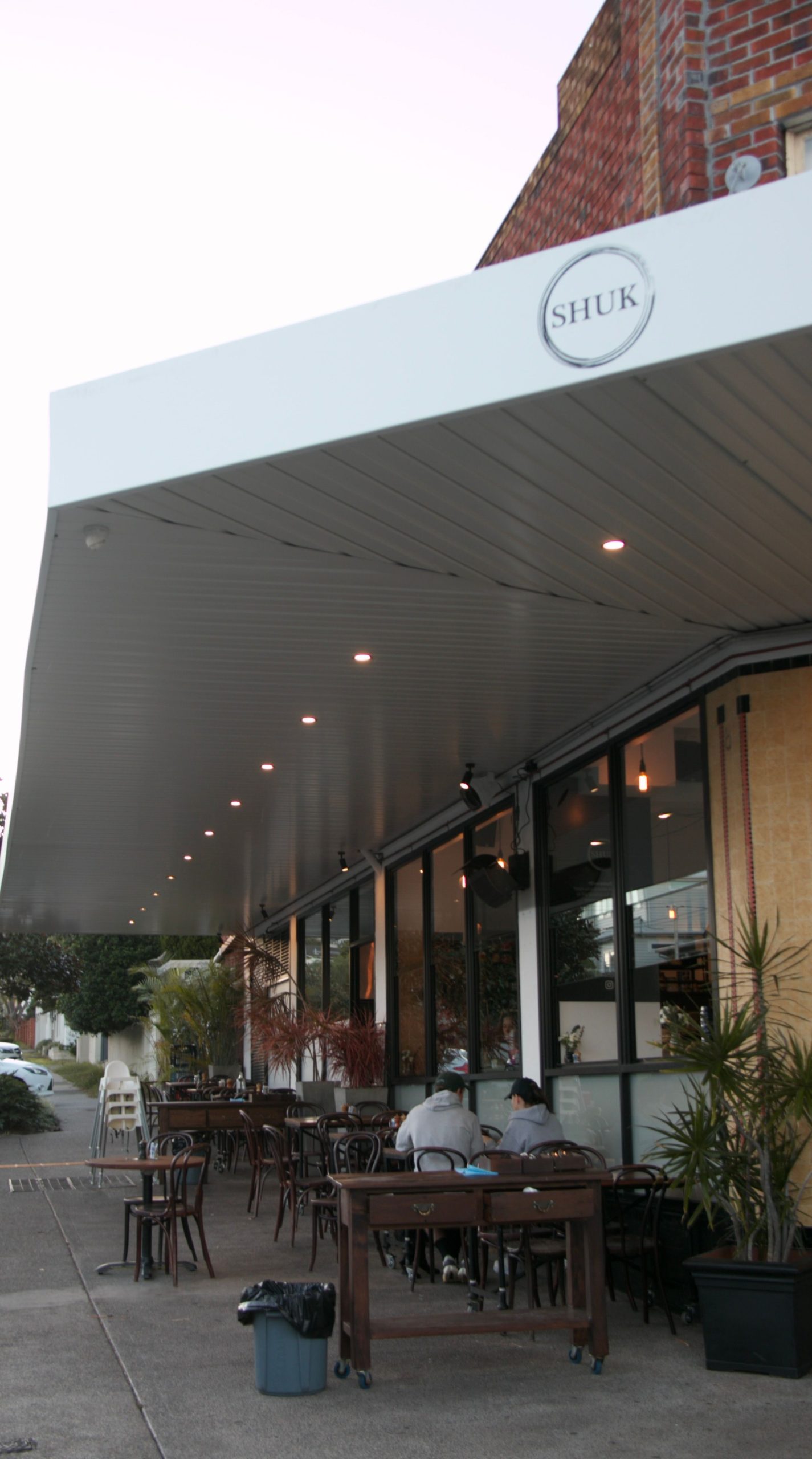
Electrical Compliance: What Actually Has to Happen
Any permanent, mains powered lighting installed outdoors in Australia falls under AS/NZS 3000, the electrical wiring rules. In practice this means the work has to be carried out by a licensed electrician, not a handyman or the awning installer, unless the system is extra low voltage (under 50V AC) and genuinely designed for owner installation, such as some solar powered festoon kits.
The wiring rules cover more than just running a cable. A compliant outdoor lighting job needs correct circuit protection, cable sized for the run and load, weatherproof cable entries and connections, and proper earthing. Fittings themselves need an IP rating appropriate to how exposed they are: a minimum of IP44 for lighting tucked under a solid awning roof out of direct weather, rising to IP65 or higher for anything exposed to driving rain or salt air closer to the coast. Every fitting should also carry an RCM compliance mark, the sign that it is legally approved for sale and use in Australia.
Skipping the licensed electrician step is not just a compliance risk, it is a real safety risk. Outdoor circuits sit exposed to moisture and temperature swings for years, and a poorly terminated joint or an underrated cable is a genuine fire and shock hazard, not a theoretical one.
Council Rules for Lighting and Illuminated Signage
If the lighting is purely functional, plain white or warm LED strip with no branding or advertising content, it usually sits within the same approval as the awning and outdoor dining area itself. Where it gets more complex is if the lighting doubles as illuminated signage, for example an internally lit fascia sign or an LED strip that spells out a business name.
Illuminated signage near residential zones typically has restricted operating hours, often a default window of 7am to 10pm unless a council has set different hours for that site, and the light must not spill excessively onto neighbouring residential premises or flash. Outdoor dining guidelines across most Sydney councils also expect any lighting fixed to a footway structure not to create a trip or head height hazard and not to obstruct the footpath.
The safest approach is to treat lighting as part of the same approval process as the awning and outdoor dining application, not a separate afterthought installed later without checking. If in doubt, a quick call to the relevant council’s planning or compliance team before installation avoids having to modify or remove non-compliant lighting after the fact.
How Lighting Interacts With the Awning Structure
Retrofitting lighting onto an existing awning is not just an electrical job, it is a structural one too. Cable runs, junction boxes and fittings all need secure fixing points that do not compromise the awning frame, its waterproofing, or its load rating. This is especially true for fabric or retractable awnings, where cables need to be routed so they do not chafe against moving parts or sit somewhere that traps water.
It is worth having whoever installs the lighting coordinate with whoever built or maintains the awning itself, particularly on an older structure. Drilling fixing points into corroded steel framework or a fascia that is already under strain from wind loading is asking for a problem down the track. On a new awning installation, it is far simpler and cheaper to plan the wiring and fittings in at the design stage than to retrofit them later.
Getting It Right the First Time
LED lighting under an awning is one of the more cost effective upgrades a Sydney shop or restaurant can make for evening trade, but it only pays off if it is done properly: a licensed electrician for the wiring, fittings rated for how exposed they actually are, and lighting plans checked against council rules before installation, not after.
If you are planning a new awning with lighting built in, or want to safely add lighting to an existing one, get in touch with Shop Awning Repairs Sydney to talk through what will actually work for your structure and your trading hours.