
Outdoor seating has become the difference between a café that just gets by and one that’s booked out on a Saturday morning. But the awning over that seating isn’t just shade. It’s the piece of infrastructure that decides whether your outdoor dining is even legal, how much of the year you can actually use it, and what customers think of your business before they’ve read the menu.
When Outdoor Dining Needs a Compliant Awning
Most Sydney councils treat footway dining as exempt development, meaning a café or restaurant can put tables on the footpath without lodging a full development application, provided the setup meets council guidelines. City of Sydney’s rules are typical of what you’ll find across the metro area: outdoor dining only qualifies as exempt development if it’s either not under an awning at all, or under an awning that’s BCA-compliant. An awning that hasn’t been engineered, certified or maintained to that standard can tip your outdoor seating out of the exempt category and into a full DA, with all the time and cost that involves.
The same guidelines also block certain workarounds: drop-down blinds, enclosures and connected umbrellas are treated as canopies and aren’t permitted as a substitute, and umbrellas generally aren’t allowed at all where a building awning already provides shelter. In practice, that means the awning is doing the legal and structural heavy lifting for your entire outdoor dining area, not just the cosmetic work.
Requirements vary by council, so it’s worth checking the specifics for your area. We’ve covered the detail for a few of Sydney’s busiest hospitality strips in our City of Sydney compliance guide and our broader council approval guide for shop awnings.
The Revenue Case for Outdoor Seating
The commercial argument for covered outdoor dining is well established. Industry data consistently shows cafés and restaurants can lift available seating by 20-30% simply by making outdoor space usable, and covered outdoor areas have been shown to increase revenue by up to 30% during peak periods, all from the same kitchen, the same staff, and the same fixed costs. An awning is what makes that space usable on the days that matter: it keeps tables dry through a passing shower, out of direct summer sun, and open for trade through Sydney’s storm season rather than shut down every time the weather turns. Outdoor seating that only works on perfect days isn’t really an asset. It’s a liability with a nice view.
First Impressions Start With What’s Overhead
Curb appeal research is blunt about this: as much as 70% of first-time sales are influenced by how a business looks from the outside, and a meaningful share of people say they simply won’t walk into a shopfront that looks neglected. For a café or restaurant, the awning is usually the single largest visual element of the shopfront. It’s what people see from across the street before they see anything else. A faded, sagging or rust-streaked awning tells passing foot traffic that nothing else has been looked after either. A clean, well-fitted one does the opposite, and it does it for free, every single day, without anyone having to run a promotion.
Why an Up-to-Date Awning Is a Business Investment, Not an Expense
It’s easy to treat an awning as maintenance, something you fix when it breaks and otherwise ignore. For a hospitality business, that’s the wrong frame. An awning is structural, weight-bearing, and exposed to the worst of Sydney’s weather every single day, which means it degrades whether you’re watching it or not. Corroded fixings, a stretched or torn cover, or a tie rod past its rated life aren’t just cosmetic problems. They’re the kind of failure that can put a table of customers at risk, trigger an insurance dispute, or shut your outdoor section down entirely during your busiest trading period. We’ve written previously about what’s involved if you ever need to make an insurance claim for awning damage, and it’s a far more disruptive process than a scheduled inspection.
Looked at that way, keeping your awning current isn’t a cost you’re trying to avoid. It’s a capital investment in the part of your business that generates the most seating, the most street presence, and the most first impressions. It’s also worth knowing that awnings, as a business asset, may fall within the ATO’s instant asset write-off provisions for eligible small businesses, which can make the timing of an upgrade more favourable than expected, though that’s a conversation for your accountant, not us. What we can tell you is the operational side: a properly engineered, well-maintained awning routinely outlasts the businesses that skimp on it, and the cost of staying on top of it is consistently smaller than the cost of an emergency repair, a lost trading day, or a council order to fix it before you can keep serving outside at all.
Fixed or Retractable: What Suits Hospitality Best
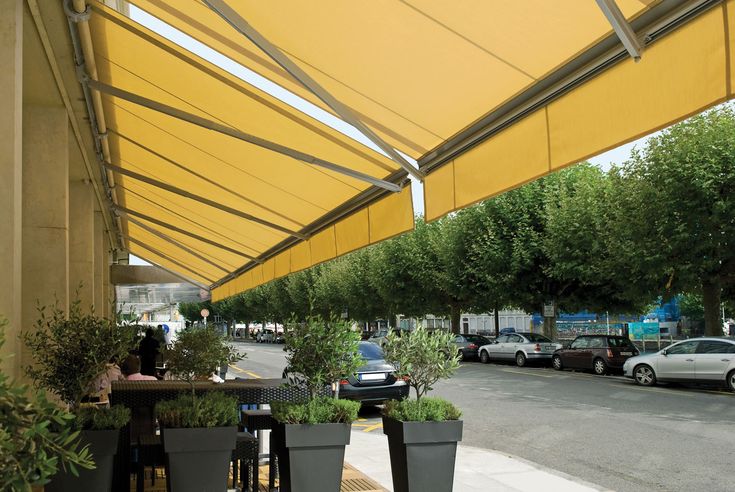
Most café and restaurant awnings fall into one of two categories. Fixed, tie-rod supported canopies suit permanent outdoor dining footprints and built-in branding: they’re the better fit if your outdoor seating isn’t changing size from one season to the next. Motorised retractable systems suit venues that want flexibility, letting you open the space up on a warm evening and close it down when the weather or the hour calls for it. Either way, the fabric, frame and fixings need to be rated for the load and specified to your council’s clearance and compliance requirements, particularly if the awning projects over a public footpath.
If your café or restaurant’s awning hasn’t been inspected in a while, or you’re planning to expand your outdoor dining footprint, get in touch with our team for a site assessment. We handle design, engineering, council documentation, fabrication and installation in house, and can also advise on what a repair versus a full replacement looks like for your specific setup. See our Awning Maintenance guide for a rundown of what ongoing upkeep should involve.
Related Reading
Or explore our shop and commercial awning services, from emergency repairs to full installations.


