
Many of the awnings and verandah canopies over Sydney’s older retail strips, including Bondi, Newtown, Parramatta and the Eastern Suburbs, were built using asbestos cement sheeting between the 1940s and the late 1980s. It’s one of the most common issues we come across during awning inspections, and getting it wrong carries serious legal and health consequences. As specialists in awning repair and rectification across Sydney, Shop Awning Repairs Sydney regularly identifies asbestos-containing materials and coordinates their safe, compliant removal as part of our awning works.
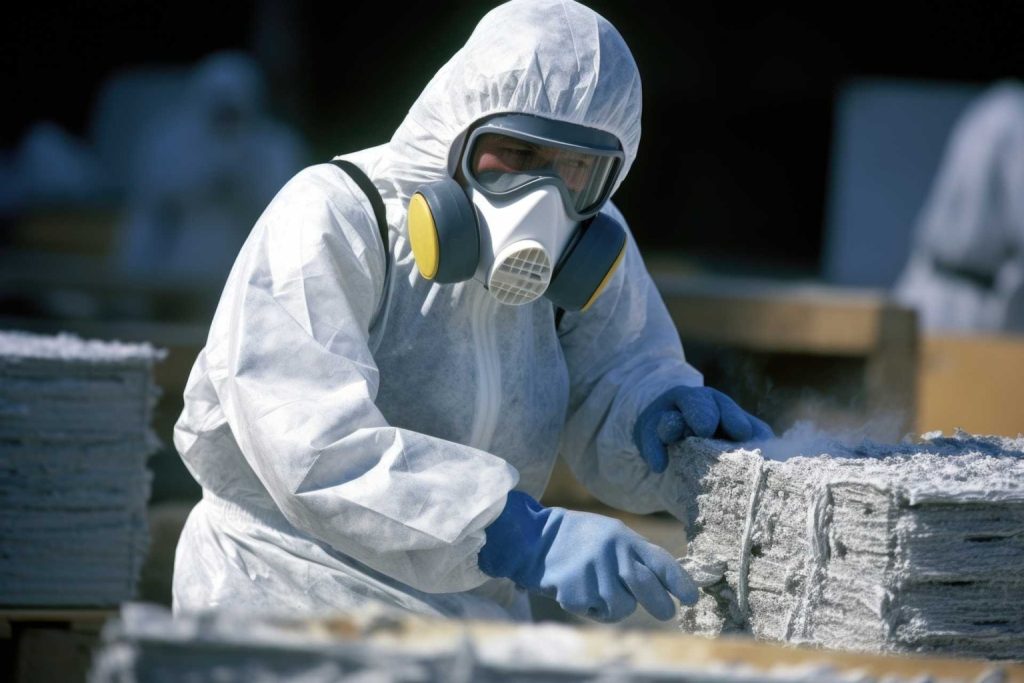
How to tell if your awning contains asbestos
If your building was constructed or last re-clad before 1990, there’s a strong chance any flat or corrugated cement sheeting on the awning roof contains asbestos. It’s most common on older verandah-style awnings over heritage shopfronts, where the original sheeting has never been replaced. You can’t confirm asbestos by sight alone; a licensed assessor needs to test a sample before any work goes ahead.
Is it actually dangerous?
Intact, undisturbed asbestos cement sheeting is generally low-risk. The danger comes from disturbance: cutting, drilling, cracking, pressure-washing or otherwise breaking up the material releases fibres into the air. Inhaled fibres can cause mesothelioma, asbestosis and lung cancer, and symptoms often don’t appear until 20 to 40 years after exposure, which is exactly why undisturbed asbestos on an ageing awning is so easy to overlook until repair work begins.
Your legal obligations in NSW
Under SafeWork NSW’s asbestos regulations, removing or disturbing more than 10m² of bonded (non-friable) asbestos cement sheeting, the type typically found on awnings, requires a licensed Class A or B asbestos removalist. Smaller jobs can technically be self-performed with the right precautions, but the material still has to be handled and disposed of correctly; it’s illegal to put asbestos waste in general waste or a skip bin. Getting this wrong can mean fines and, more importantly, real exposure risk to tenants, staff and pedestrians underneath the awning.
Why professional assessment matters before any repair
The most common way people get exposed isn’t during a planned removal; it’s during a routine repair on an awning nobody realised contained asbestos. If your awning shows any wear or damage and predates 1990, get it assessed before any drilling, cutting or structural work begins.
What the Removal Process Looks Like
When asbestos is confirmed on an awning, the work follows a set sequence designed to protect everyone in and around the building:
- Sampling and testing. A sample is taken and analysed by an accredited laboratory to confirm whether asbestos is present.
- Notification. For licensed removal work, the removalist must notify SafeWork NSW before work begins.
- Site setup. The work area is barricaded, signed and, where the awning is over a public footpath, managed with pedestrian controls so the public is kept clear.
- Removal. Sheets are wetted down and removed whole wherever possible, rather than cut or broken, to minimise fibre release.
- Disposal. Material is wrapped, labelled and taken to a facility licensed to accept asbestos waste.
- Clearance. A clearance inspection is carried out once licensed removal is complete, confirming the area is safe before other trades return.
What Not to Do in the Meantime
If you suspect your awning contains asbestos, avoid anything that could disturb the sheeting until it has been tested:
- Do not pressure wash, sand or scrape the sheeting.
- Do not drill into it to fix signage, lights or brackets.
- Do not walk on the awning roof or let anyone climb onto it.
- Do not attempt to repair storm damage or cracked sheets yourself.
Replacing the Awning Roof After Removal
Once the asbestos has been removed, the awning roof is typically replaced with modern materials such as Colorbond steel sheeting or polycarbonate panels, depending on the look and light you want. On heritage buildings, we can match the original sheet profile so the awning keeps its character. It is also the right moment to have the frame, tie rods and fixings inspected, as these are fully exposed once the roofing is off. See our guide to heritage awning styles if your building is an older one.
Shop Awning Repairs Sydney: your asbestos awning removal specialists
Asbestos identification and removal is a core part of our awning inspection and rectification service. We assess ageing awnings for asbestos-containing materials, arrange licensed testing and removal, and manage the full process through to a safe, compliant replacement, so you’re never left guessing or exposed to unnecessary risk. If you’re unsure about an older awning on your property, get in touch with our team for an inspection.
Related Reading
Or see everything we offer on our services page, covering repairs, maintenance and new installs.