
Woollahra Council covers some of Sydney’s most tightly heritage-controlled retail strips, from Double Bay’s harbourside shopping streets to the Victorian terraces of Paddington and the village centres at Vaucluse, Rose Bay and Watsons Bay. If you’re installing, repairing or replacing a shop awning anywhere in this LGA, Council treats awning design as a streetscape issue as much as a structural one, and that shapes what you’re actually allowed to build.
Exempt, Complying and Full DA Pathways
Like every Sydney council, Woollahra assesses awning work under three possible pathways: exempt development that needs no approval at all, a Complying Development Certificate for straightforward work that meets set standards, and a full Development Application for anything more complex or heritage affected. Complying Development Certificate applications are lodged through the NSW Planning Portal, not directly with Council. See Woollahra’s Exempt and Complying Development page and its Do I Need a DA guide for the full picture.
Woollahra’s Own Awning Design Standard
Woollahra is more prescriptive about awning design than most Sydney councils. Chapter D3 of the Woollahra Development Control Plan 2015, which sets general controls for the LGA’s neighbourhood and mixed use centres, specifies that an awning must be a solid suspended steel box type section with a minimum soffit height of 3.2 metres, that its height must follow the street grade and stay continuous with the awnings on adjoining properties, and that under awning lighting is required, either recessed into the soffit or wall mounted on the building. Individual centres, including Double Bay, Vaucluse, Rose Bay and Bellevue Hill, carry their own precinct level awning controls on top of this in Chapters D1 and D5. Any awning signage is assessed separately under Chapter E7. See Chapter D3: General Controls for Neighbourhood and Mixed Use Centres for the full detail.
Heritage Conservation Areas: Paddington, Woollahra and Watsons Bay
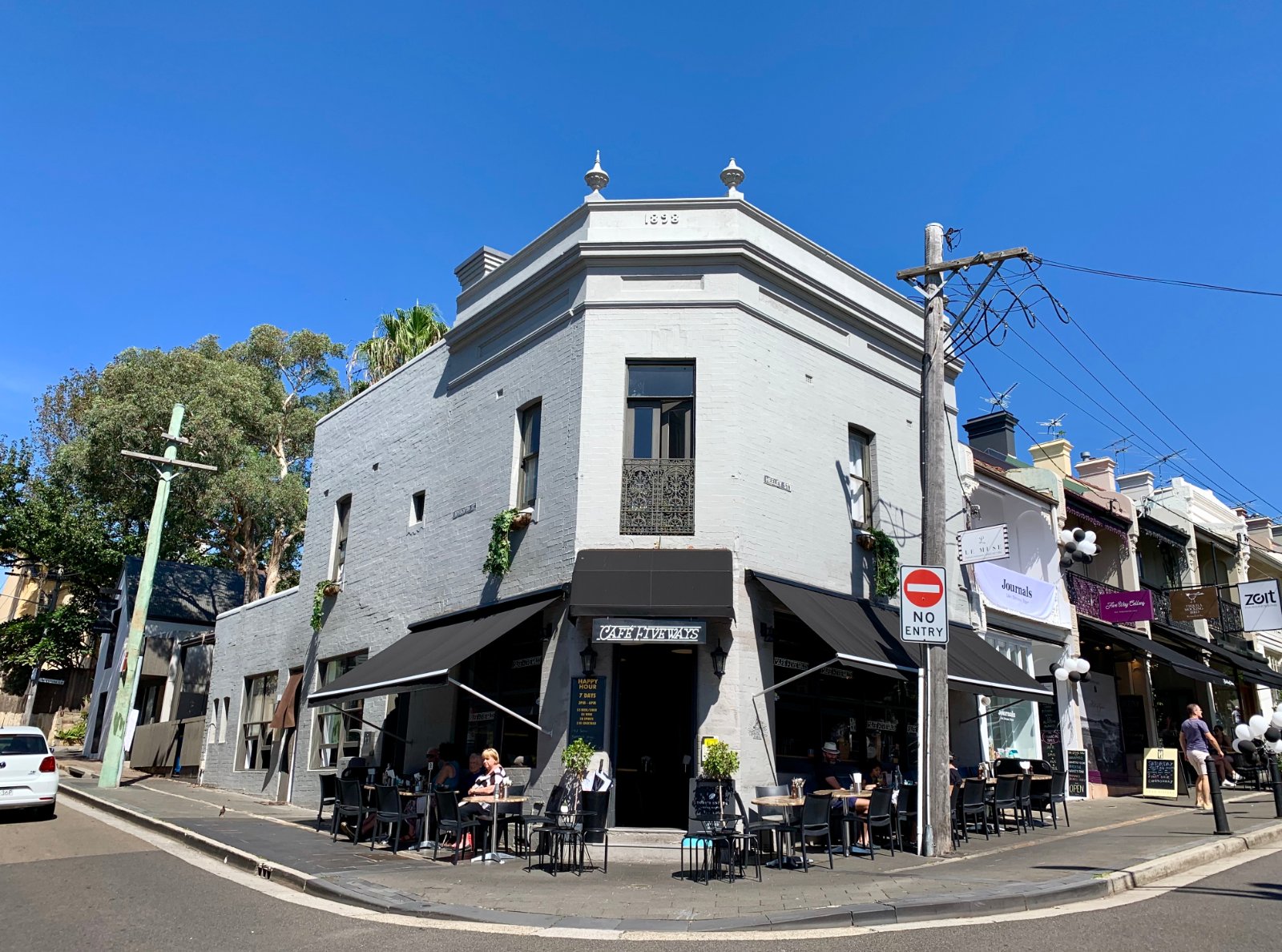
Woollahra has some of the most awning sensitive heritage conservation areas in Sydney, and Paddington’s Oxford Street and Five Ways shopping strips are the clearest example. Council’s controls treat the awning line as a datum for the whole facade: original windows above the awning must be retained at their original size, colour schemes are assessed differently above and below the awning line to protect the heritage streetscape, and where a continuous awning is already a characteristic feature of the strip, a replacement must complement that existing streetscape character rather than stand apart from it. Exempt development generally does not apply to external work on a heritage item or within a heritage conservation area, so awning work on a contributory building in Paddington, Woollahra village or Watsons Bay will usually need a full Development Application. See Council’s Heritage and Development page and Chapter C1: Paddington Heritage Conservation Area for what applies to a specific property.
Footway Approval Is a Separate Step
Most shopfront awnings in Woollahra’s commercial strips project over the public footpath, which brings a separate approval into play alongside the planning pathway. Erecting or maintaining a structure over a public road requires Council’s consent under Section 138 of the Roads Act 1993, and Woollahra manages this as an encroachment on the road reserve, generally requiring a formal agreement and, where appropriate, registration on the property title. This runs alongside, not instead of, whichever planning pathway applies to the awning itself. See Council’s Encroachments on Council Road Reserves page and Carry Out Works on a Public Road guide for the process.
Structural Certification, Whatever the Pathway
Regardless of which approval pathway applies, an awning fixed to a building and projecting over a footpath needs engineering certification confirming the fixings meet structural and wind loading requirements, a document Council and certifiers will ask for as part of any application. This is a standard part of our new awning installation process, alongside the general council approval considerations that apply across Sydney and the typical cost factors involved in a new installation.
How We Help Woollahra Businesses
Shop Awning Repairs Sydney works across the Woollahra LGA, from Double Bay and Paddington through to Vaucluse, Rose Bay, Bellevue Hill and Watsons Bay, and prepares the structural certification and supporting drawings that Council or the NSW Planning Portal will ask for. If you’re planning a new awning or need an existing one assessed against Woollahra’s design and heritage controls, get in touch with our team for advice specific to your property.
Related Reading
Or visit our awning services page for more on repairs, maintenance and installations.
For heritage shopfronts and larger commercial buildings, our commercial awnings page covers steel-frame options in more detail.
Source: Woollahra Development Control Plan 2015, Chapter D3 (Woollahra Municipal Council).
