
Most shop awnings do not fail overnight. They give warning signs for months, sometimes years, before something gives way. The trouble is that many of those signs are easy to walk past every day without noticing. This guide explains the seven most common warning signs we see on shop and street awnings across Sydney, what each one usually means, and how urgent it is.
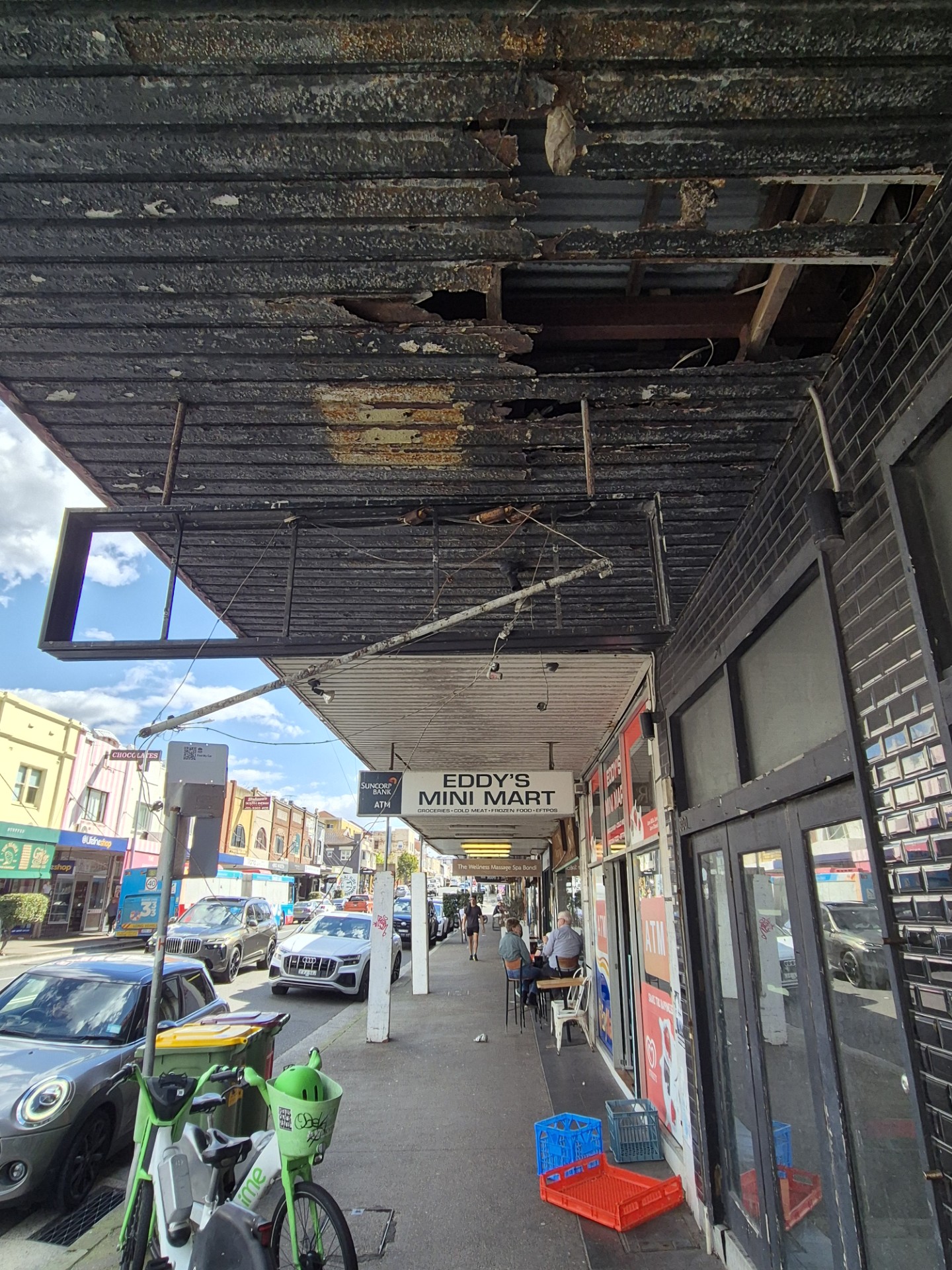
1. Rust Stains on the Soffit or Fascia
Orange or brown streaks running down the fascia, or rust spots coming through the paint on the underside, mean water is getting to the steel inside. Surface rust can often be treated, but rust stains frequently come from hidden parts such as tie rod connections, brackets and frame members that you cannot see. In Sydney’s coastal suburbs salt air speeds this up considerably. Our guide to metal awning corrosion explains what can be saved.
How urgent: moderate. Get it inspected before the rust spreads into structural parts.
2. The Awning Is Sagging or Out of Level
Stand across the street and look along the front edge of the awning. If it dips, twists or drops at one end, something has moved. A sagging awning usually points to stretched or corroded tie rods, failed wall fixings or a damaged frame. It can also mean water is pooling on the roof and adding weight.
How urgent: high. A sagging suspended awning should be checked quickly, and propped if needed.
3. Leaks and Dripping Water
Water dripping onto the footpath or your shopfront after rain means the roof sheeting, flashings or gutters have failed. Leaks are more than a nuisance for customers: trapped water rots timber linings and rusts steel from the inside. Our guide on why shop awnings leak covers the usual causes.
How urgent: moderate. Fix it before water damage spreads into the frame and soffit.
4. Missing, Loose or Bulging Soffit Panels
The soffit is the lining under the awning. Panels that are bulging, stained, cracked or missing are often the first thing shop owners notice. They usually mean water has been getting in for some time, and a missing panel also exposes the frame and wiring above. Loose panels can fall onto people walking underneath.
How urgent: moderate to high, especially if panels are loose over a busy footpath.
5. Rusted or Loose Tie Rods and Cracks Around Fixings
On suspended awnings, angled steel tie rods run from the awning up to the building wall. Rust where the rods meet the wall or the awning, rods that look bent or loose, and cracked brickwork or render around the wall fixings are serious warning signs. These are the parts that hold the awning up. Read more about rusted tie rods.
How urgent: high. Call for an inspection straight away.
6. Blocked or Overflowing Gutters
Leaves, rubbish and grime build up quickly in awning gutters, particularly on busy roads. When gutters overflow, water spills over the fascia, stains the shopfront and finds its way into the frame. Ponding water on the roof also adds weight the awning was never designed to carry. Regular awning maintenance prevents most of this.
How urgent: low to moderate, but easy and cheap to fix early.
7. Damage From a Truck, Bus or Storm
A bent fascia, a dented corner or a twisted section after a vehicle strike or a storm should never be ignored, even if the awning still looks mostly fine. Impacts can loosen tie rods and fixings well away from the visible damage. If you think the awning is unsafe, keep people out from underneath and arrange an emergency make-safe. If insurance is involved, our guide to awning damage insurance claims can help.
How urgent: high. Get it checked the same day if possible.
Bonus Sign: A Letter From Council
If your council has written to you about the awning, take it seriously. Councils inspect street awnings because they hang over public footpaths, and a letter can turn into a formal order if it is ignored. Our guide to council awning safety orders explains what to do next.
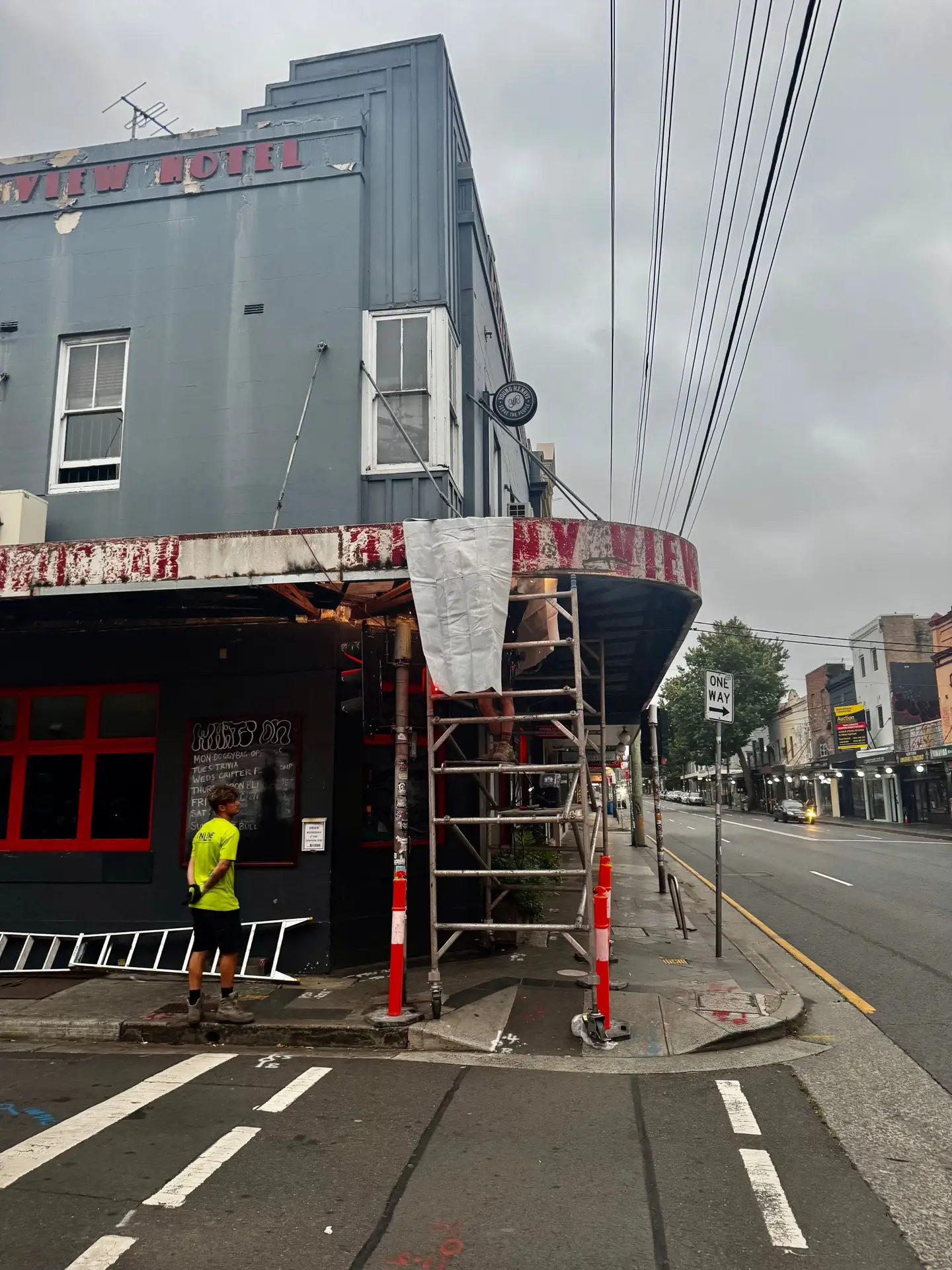
What to Do If You Notice These Signs
- Take photos from the footpath and across the street so you can track any change.
- If anything looks loose, sagging or cracked, keep people out from underneath until it is checked.
- Book an inspection. Many problems are found early enough for a simple repair. Our awning inspection and certification service covers what is involved.
- If the damage is extensive, our guide on whether to repair or replace an awning helps you weigh up the options.
- Remember that awnings over 10 years old should be inspected by a structural engineer, even if they look fine.
Frequently Asked Questions
How do I know if my shop awning is unsafe?
Sagging, loose or rusted tie rods, cracks around wall fixings and recent impact damage are the most serious signs. If you see any of these, keep people out from underneath and have it inspected straight away.
How often should a shop awning be inspected?
Have it looked over at least once a year and after major storms. Awnings over 10 years old should be inspected by a structural engineer, and re-inspection about every 5 years is recommended.
Can a rusty awning be repaired instead of replaced?
Often, yes. Surface rust, leaks, soffit damage and corroded tie rods can usually be repaired. Replacement is normally only needed when the main frame is badly corroded or the awning no longer meets current standards.
Who pays for awning repairs on a leased shop?
It depends on the lease. Many leases make the landlord responsible for structural repairs and the tenant responsible for cleaning and minor maintenance, but council will look to the building owner if the awning becomes unsafe.
Book an Awning Inspection
Noticed one of these signs? We carry out shop awning repairs across Sydney, from small leak and soffit fixes to tie rod replacement and full restorations. Contact us to book a free on-site inspection.